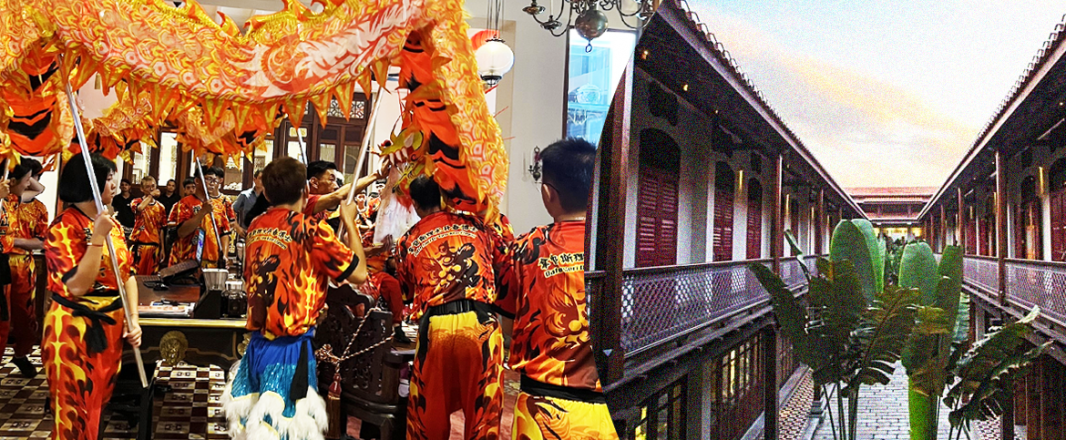
“Material heritage can be acquired, what was missing was the living culture”
In Penang, the eighth day of Lunar New Year known locally as “Pai Ti Kong” – prayers to the Jade Emperor – is celebrated with much gusto and fervour by the Hokkien clan, which is the dominant Chinese community. No other hotel celebrates it with as much passion and belief as the Seven Terraces, where owner Chris Ong has recreated the ceremony faithfully and elaborately, guided by lessons from his grandmother.
Over time, the boutique hotel’s “Pai Ti Kong” ceremony has gained a reputation and following not only among locals but also Seven Terraces’ guest and friends who return at this time for the year to be part of this festive occasion. It underscores the pivotal role hotels can play in restoring not only physical heritage but living heritage, and weaving local communities together to bring back “the soul” to heritage zones.
This is the story of how Chris Ong pursues his mission of bringing tangible and intangible heritage back to life through his hotels, his collections of Straits Chinese artefacts and the experiences he creates around his properties.
In the footsteps of Grandmother
When champion swimmer-turned-banker-turned-hotelier Chris Ong moved back to live in the inner city of George Town, Penang, in Lebuh Muntri, he felt something was missing.
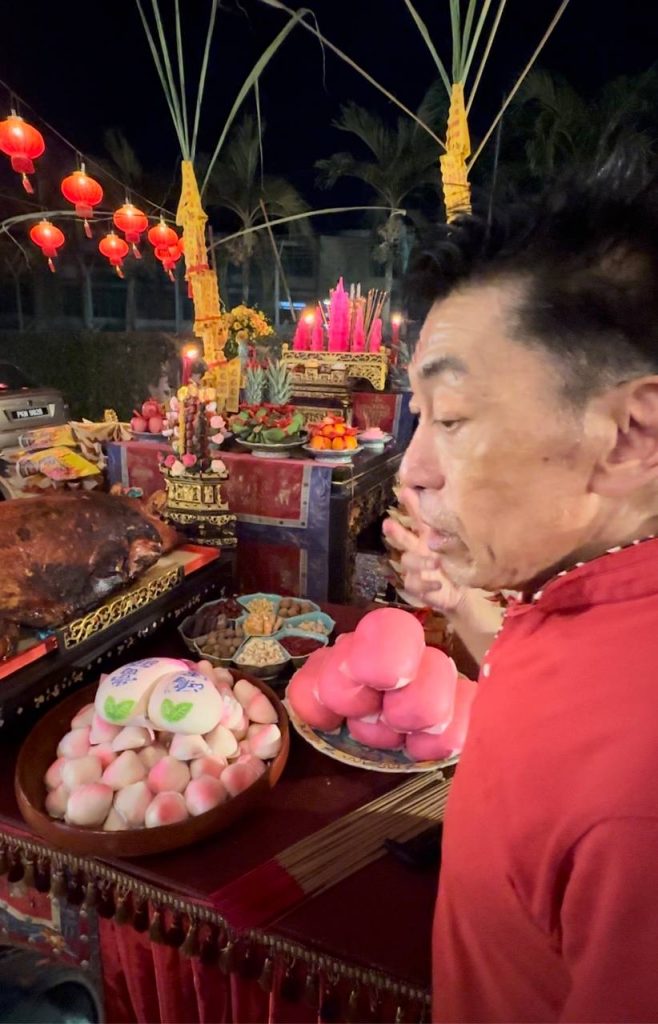
Chris Ong explaining the significance and meaning behind each offering on the altar to the Jade Emperor.
“Things looked the same, with familiar faces, but there were no neighbours around. Something was missing and it took me a while to put my finger on it. Material heritage can be acquired, borrowed or even restored. What was missing was the soul, the people, the residents, the living culture, the religious practices, the belief system.”
After establishing his hotels, Seven Terraces, Muntri Mews and Muntri Grove, all aligned on the same Muntri/Stewart roads axis, where he lives, he started to look for reasons to the missing piece.
“There is a community of business owners and workers in the hospitality businesses but there were very few residents who were committed to their local street and community. I used to know the new moon and full moon days because my neighbours would light incense and candles on those days but since they too have passed on, I needed to download my lunar calendar app.”
He reflected on his own past, to the days of living with his grandmother. “Prayers to the Jade Emperor was always marked as VID (Very Important Day) in my grandma’s calendar, and preparations would take place days ahead.
“When I lived overseas for 30 years, I would mark the day with a modest altar set up on the eve of the auspicious day, light incense, candles and offering the season’s best fruit at any of my foreign residences anywhere in the world where I happen to be. It was built into my DNA and subsconscious.”
Thus it was only natural that when he moved back into his own home in Lebuh Muntri, he would continue this tradition. “There were three households in my line of sight on the axis setting up the altars on the eve of the 8th day of Lunar New Year. There would have been almost every house setting up altars in this predominantly Chinese community about 50 years ago. But even the three flag carriers of this tradition dwindled down to one plus myself.”
Weaving artefacts and community together through rituals
In 2013, after Seven Terraces was established, Ong decided to transfer his main ritual offerings to the hotel, although he continues to set up a modest altar in his home for the sake of continuity.
This was when the stars aligned. “As an avid collector of Straits Chinese artefacts, I had always admired all the paraphernalia and gilded trays and stands, polychrome lotus leaf shaped offering plates, plus a whole lot of other items.
“I had started to acquire the odd piece here and there but when I started to resurrect the traditional rituals of “Pai Ti Kong”, the pursuit of these artefacts took on a momentum of its own. I always saw parallels between the Florentine Medicis and the other nobles in their quest for beauty for offering to the Divine.
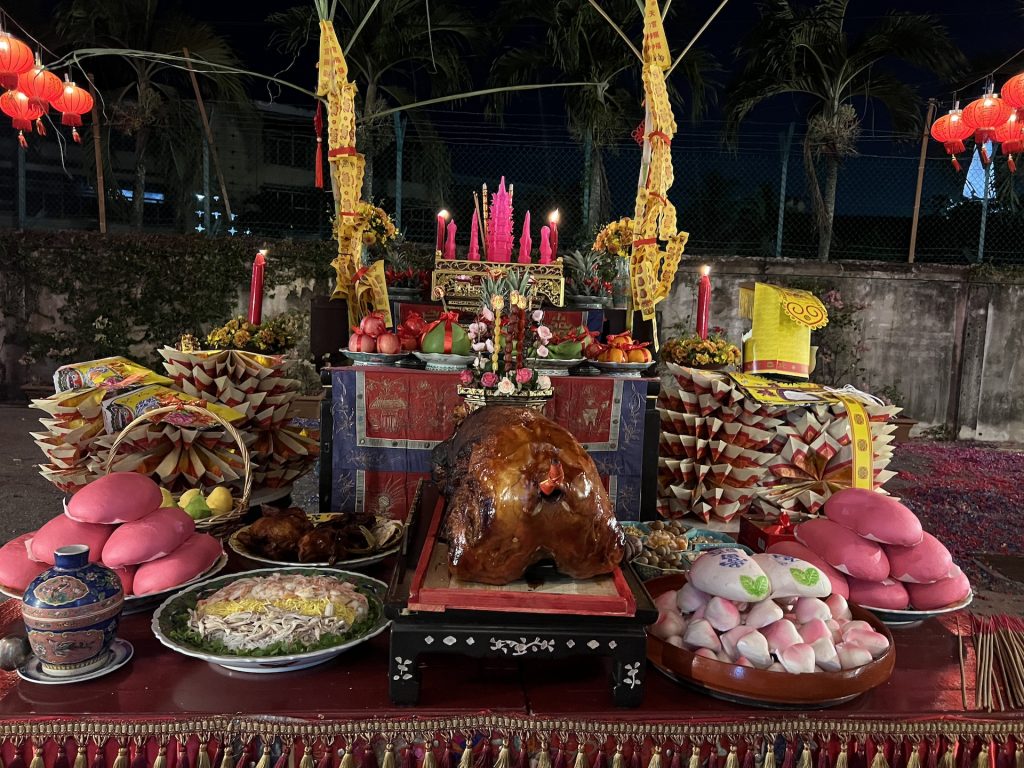
The altar to the Jade Emperor, in full display and colour.
“I see the parallels on a more modest scale what the serious practitioners do here for the “Pai Ti Kong” rituals. I tell my staff and family that one must be ‘present’ to contribute wholeheartedly in this tribute . No short-cuts, quick fixes or near enough is close enough.”
Says Ong, “The documentation and revival of our Penang style “Pai Ti Kong” ritual is from oral history from about 1920s which we continue to follow. It is very different to the Malacca and Singapore-style rituals and celebrated in very few Hokkien cities anywhere.
“I am sure that what I do would satisfy my grandma’s most stringent test. Because I learn more from questions asked and natural curiosity, I have written an SOP on what goes on the table but if it’s done without the passion and soul it would turn out to be a meaningless ritual.”
Giving purpose and soul to the business
Today, he says Seven Terraces, under the stewardship of Colin Yap and his patronage, is proud to be the torch bearers of George Town’s tangible and intangible cultural heritage of the Straits Chinese community.
“There is a purpose and soul for the business. We may not have the longest or biggest altar table or the most roast pigs but we do have the most beautiful antique China and embroideries and carved and gilded wooden stands and candlelabra.
“I bring them out once a year and I can still hear the quiet gasps for air by myself and others. The collection of 26 large medium and small lotus leaf plates would average at least RM250,000 if it’s at all possible to replace together with the lacquered boxes, the sweetmeat tray and porcelain sections would add at least another RM100,000 RM to replace them.”
He has his critics who say he’s just showing off “but those who know me understand my raison de tre and my passion for preserving our tangible and intangible heritage.
“The preservation and restoration and adaptive reuse of Straits Chinese architecture goes hand in hand with my interest in reviving the intangible heritage of the Straits Chinese community to breathe life back into the city that’s relevant, have a sense of place and something that binds and sustains the community.
“Besides an adjunct to the branding of our hospitality business, heritage is our business and lifestyle and reminds us the ticking of the seasons. We do four Chinese rituals honouring our ancestors that were ritualised by the Straits Chinese community.”
These four – two ancestor prayers on New Year’s Eve and Cheng Beng – are performed at his home while the 7th month Brotherhood (first fleet Ho Heah Tee) and Pai Ti Kong are performed at Seven Terraces, and all have been institutionalised with SOPs so they live on through generations.
Hotels cannot be destinations in themselves, it’s the precinct and destination first
Another intangible cultural heritage Ong is reviving is the unique food culture being promoted and made by artisanal methods. “To partake in the more luxurious nyonya food was always a home coming issue for the practitioners. But it’s a vibrant community of nyonya foodies that’s spurring it along,” he says.
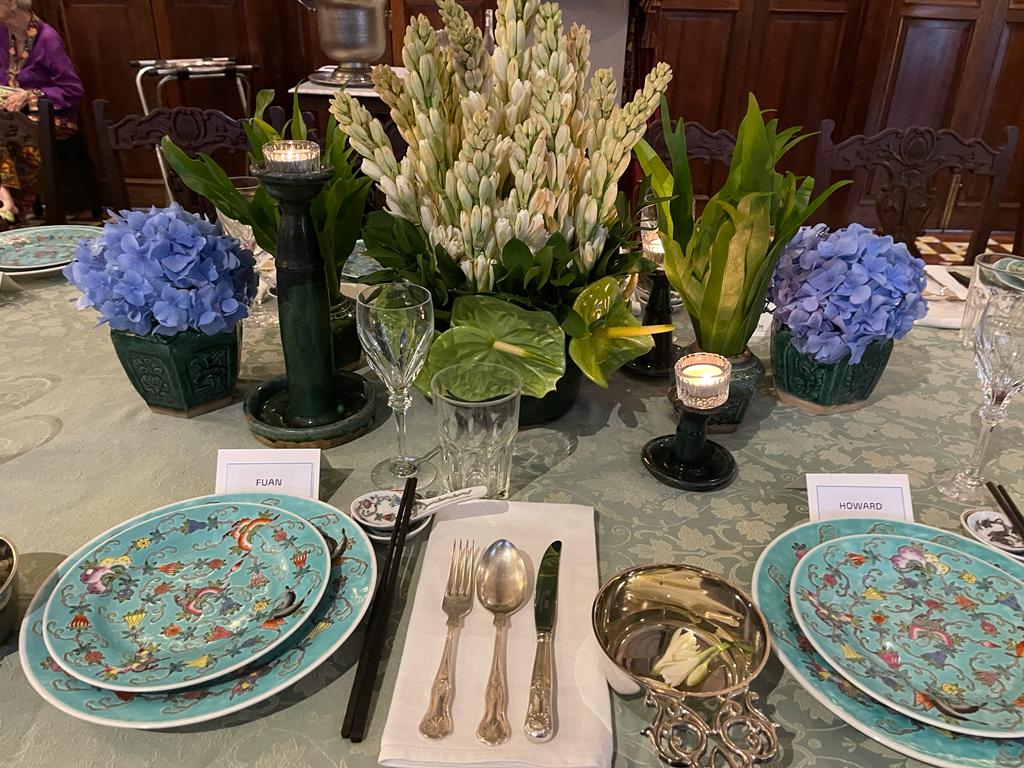
He adds, “The precinct and the destination has to be promoted above all. I don’t believe hotels can be a destination in itself. We do our tailored personal immersed programmes to understand Straits Chinese culture, and staying truly boutique and the integrity to stay that way gives me my zen.
“Bigger is not always the end objective. Being better, upgrade of the rooms, adding layers, adding texture, improving the quality of the antiques are all part of my mission to leave it in the best possible shape with no debt, a sense of purpose and maybe even for the trustees of my foundation to be able to take this to another level.”
He derives most satisfaction from his antiques business, which really took off during the pandemic, when his hotels were closed. He says the antique business and a sense of creating artefacts from antique furniture remnants is very satisfying, as well as restoring precious pieces – such as these doors he saved last year.
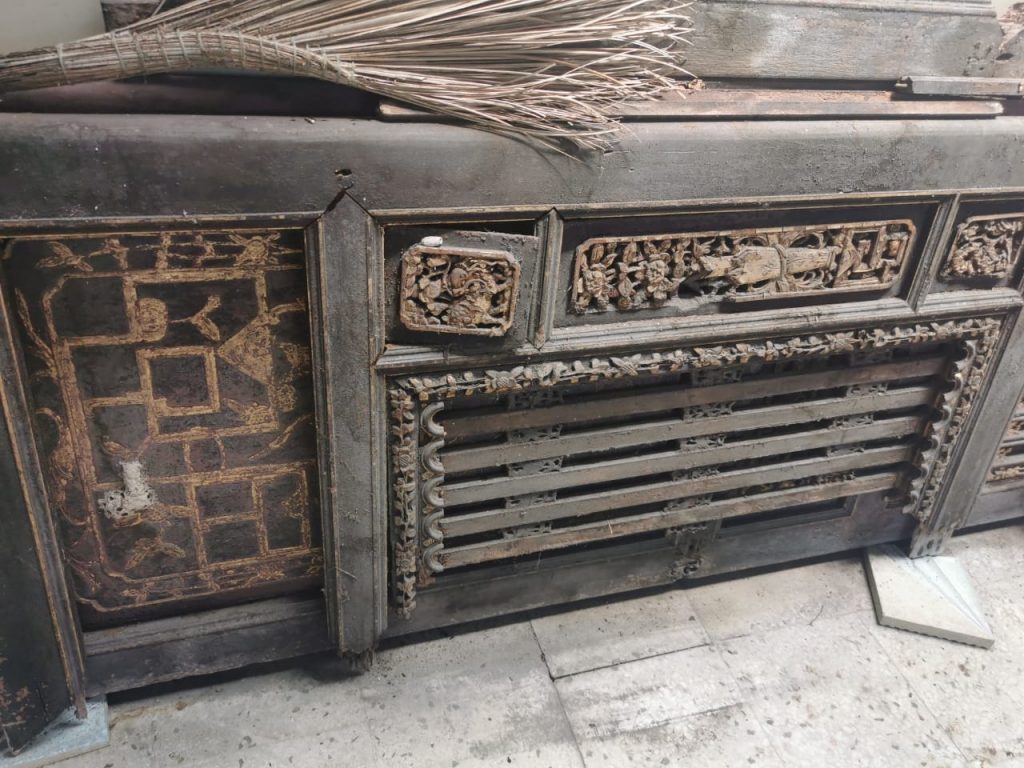
“Working around and creating beauty is how I would like to spend my dotty days . An exquisite flower shop, antiques business, fabulous restaurant and staging events as well as defining and reviving the intangible heritage of the Straits Chinese is what I want to do when I grow up.
“What I would like to create is an institution not dissimilar to the Jim Thompson foundation to carry on my legacy.”
Watch heritage exhibition “Altars to the Gods”
Watch “Hungry Ghost Festival”