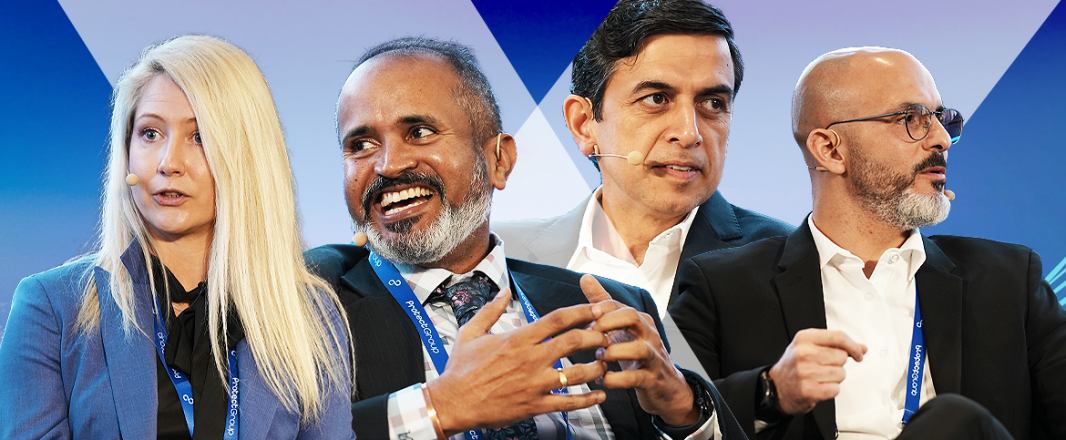
In a lively and sometimes irreverent panel at Phocuswright WiT Middle East in Dubai last week, hospitality and travel technology leaders debated how AI, automation, and invisible operations are reshaping the future of travel, payments, and the guest experience.
The session kicked off on a playful note with an AI-generated song – a reminder of just how deeply AI is now woven into everyday life.
But the discussions quickly turned to serious predictions about a future where, Sanjay Sharma, CTO, Orascom Hotels Management, quoting Nvidia’s Jensen Huang, warned, “in the very near future, “IT employees will be reporting to HR” because managing AI “agents” will become a core human responsibility.
“Whether you are a doctor or you are an IT professional, you will be managing agents. You will be managing digital workers.”
He pointed to new paradigms like zero-click interfaces and agent-based operations. “The ad world is about to die because now we all need answers at zero click, no click. Zero phase user interface is coming into our life – where customers don’t book in five steps anymore. Their preferred channel will anticipate and complete their wishes through conversational commerce.”
Cool tech moments: From emotion recognition to snore pillows
Before diving into travel, each panellist shared the most mind-blowing tech innovation they had recently encountered:
Ruta Greenslade, Director of Partnerships, B2B Travel, Visa, spoke of playing with Hume AI, an emotion recognition engine that reacted to her frustration when it recommended kale-based recipes – despite her clear dislike for kale. “It picked up that I was getting upset and suggested we start again,” she said. “That felt human.”
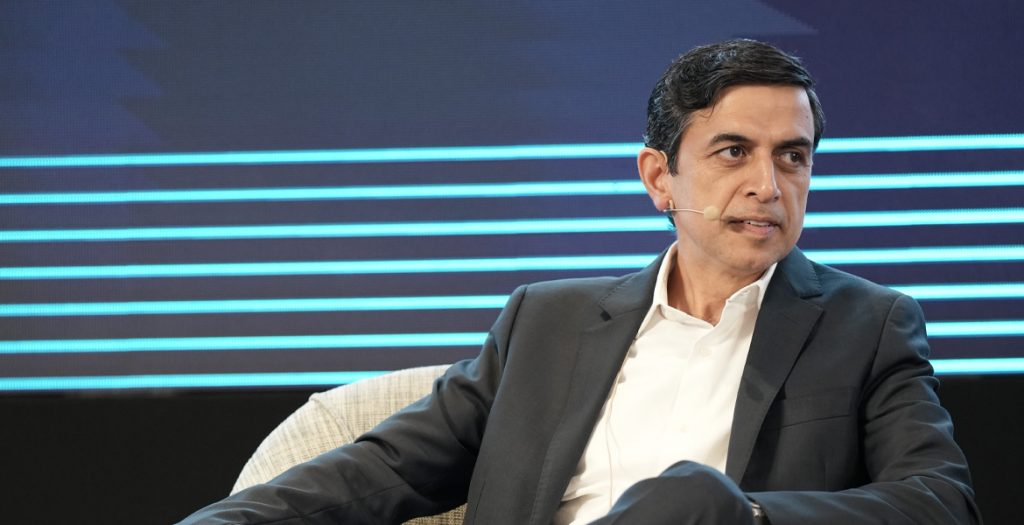
Sanjay Sharma, CTO, Orascom Hotels Management, quoting Nvidia’s Jensen Huang, warned, “in the very near future, “IT employees will be reporting to HR” because managing AI “agents” will become a core human responsibility.
Qais Amori, Chief Digital Technology Officer, Almosafer, highlighted the silent revolution of quantum computing. “A chip the size of a fingernail could soon surpass the power of all supercomputers combined,” he noted. “Quantum computing will come from the back and suddenly leap ahead.”
Vishal Anand, Head of IT and Digital Excellence, Yosh Hospitality, mentioned an AI-powered “snore pillow” designed to adjust to snorers by gently inflating – a solution he joked could “save” marriages.
Sanjay described his excitement – actually he described it as a “technical orgasm” – “when I see a technology changing the way we work”. He cited the example of a HR leader who used Grok to profile and assess candidates based on public and private data. “It’s scary, but it augments human decision-making if used right,” he said.
AI in payments: Investing in fraud management
For Ruta, AI is not a future consideration; it is a necessity in hospitality, travel and payments. She said Visa was the first to deploy AI-based technology in risk and fraud management in 1993.
Today, she said, it’s opened up opportunities in enhancing customer experience. “By knowing customer preferences, AI can suggest very tailored offers and adapt the pricing at the right time. The other thing is optimizing revenues and spend. By integrating AI into the virtual card payment process, you get paid faster.”
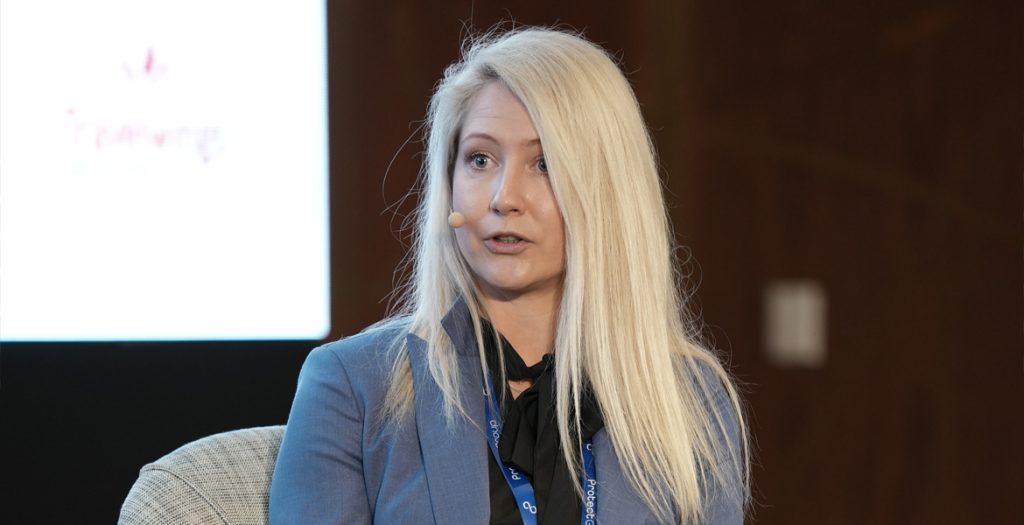
Ruta Greenslade, Director of Partnerships, B2B Travel, Visa, spoke of playing with Hume AI, an emotion recognition engine. “That felt human,” she said
Speaking about fraud, she said, “Visa is investing a lot of money in that we are training our AI agents on the billions of transactions and identifying any anomalies, and we can stop the threat in real time, while still obviously ensuring that legitimate transactions are still going through.
“On the other hand, if we are doing that, if all of us are using AI for good when it comes to fraud, the fraudsters obviously also deploy AI as well. So, we always need to make sure that we are ahead by really working on it and investing in it.”
Transformation in action: 35% increase in front office tips
Sanjay shared an update on his mission to digitally transform Orascom’s commercial capabilities. In an earlier interview with WiT, he had said, “We want to transform inventory distribution, CRM and revenue management and undertake a PMS migration to the cloud. We are relooking everything. We worked hard with Oracle to convince them to work with us – to redesign the business processes from scratch and then move to Oracle Cloud.”
For him, digital transformation isn’t just about moving servers; it’s about starting with the guest experience.
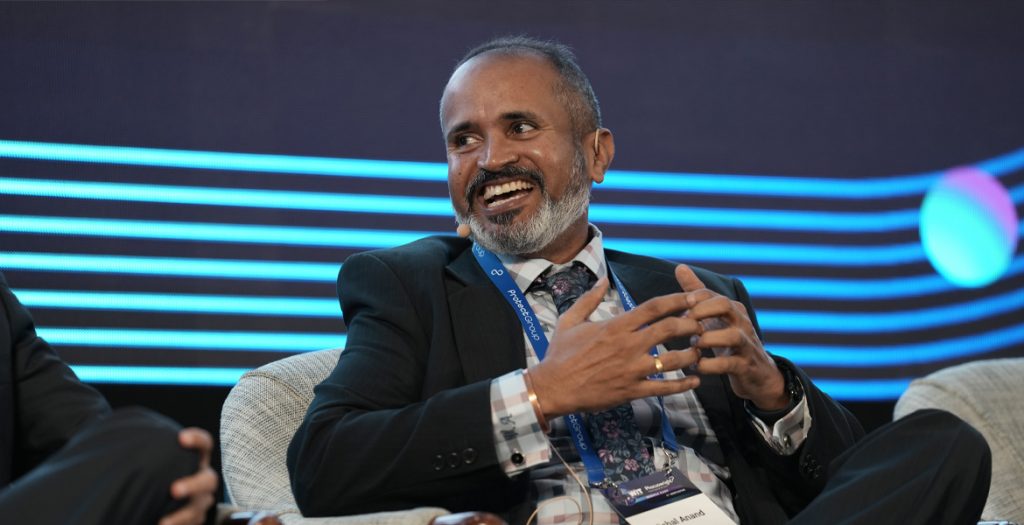
“Fully autonomous service delivery with agentic robots” are what Vishal Anand, Head of IT and Digital Excellence, Yosh Hospitality, dreams would happen if money and time weren’t factors
“I believe, whenever you have to transform any technology, whether it is AI or anything like that, first, we need to think of the outcome, then the services and then only, the technology or AI. So, we started with defining the future user experience, then worked backward to technology,” said Sanjay.
He described how Orascom reimagined hotel checkouts by studying Amazon Go (walk out without paying at a counter) and Uber (exit without transaction friction).
The result? A redefined “departure experience”, not just a checkout. “We don’t call it checkout anymore,” he smiled. “We just let you go.”
Its digital transformation has so far delivered these results:
- 35% increase in front-office tips
- 87% cut in distribution costs
- 90% operational efficiency
- 60% reduction in call times
For any meaningful change to happen, Vishal said, “We need to uplift the digital mindset among the leadership team, and that is what will drive the adoption, implementation and usage of technology into our organizations.”
Direct vs indirect distribution: The growing battle
Even as hotel companies such as Orascom attempt to reduce distribution costs by investing in direct, it is evident that travel intermediaries are playing an even bigger role today.
Giving a big picture view of travel distribution trends,Visa’s Ruta said that in 2024, the travel market was valued at US$1.6 trillion, with 24% of that volume flowing through OTAs.
“OTAs and wholesalers are actually playing a massive role in this,” she said. She also pointed to a key structural shift: the growth of the Merchant of Record (MoR) model, especially at Booking.com, where it now represents 64% of bookings. MoR allows companies to innovate more freely on customer payments and user experience.
It is clear the future will be determined by who innovates faster, personalises better and delivers the better customer experience, regardless of channel.
Qais shared that Almosafer is using advanced AI models to summarise reviews as well as highlight “the most important thing for that particular customer booking at that particular time”. He said this has had a huge impact on conversions.
It is also adopting an AI-and-human strategy by equipping call centre agents with AI co-pilots “to allow them to serve customers better in a more personalized way”.
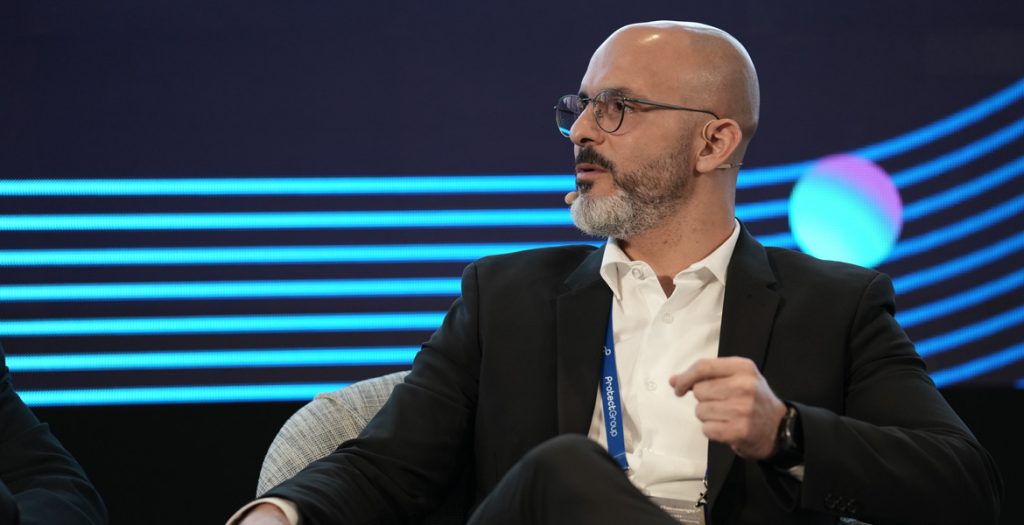
Qais Amori, Chief Digital Technology Officer, Almosafer, highlighted the silent revolution of quantum computing. “A chip the size of a fingernail could soon surpass the power of all supercomputers combined,” he noted. “Quantum computing will come from the back and suddenly leap ahead.”
Meanwhile, in engineering, AI-powered development tools like GitHub Copilot and Amazon Q are helping build faster, smarter software. “While I know there’s a lot of talk about fully agentic software engineering, it is not yet fully developed, and we need to make sure that our intellectual property is within the organization. But as well, we need to expand the speed of delivering because speed is key in our business.”
The dreams: invisible tech and hassle-free travel
If time and money were no object, the panellists’ dreams aligned around making operations invisible:
- Sanjay Sharma: “I want operations to be invisible to both guests and staff, powered by autonomous systems.”
- Vishal Anand: “Fully autonomous service delivery with agentic robots.”
- Qais Amori: “Hassle-free travel, where travellers control everything from the palm of their hand.”
- Ruta Greenslade: “Unified payments across AI agents – seamless and invisible.”
The final vote: Human vs machine, 2035?
Twelve months ago, a similar panel at the conference had predicted a profound shift in the human-machine relationship. When asked again – who is winning today? – many in the audience voted “machine”.
Sanjay said, “It’s not a simple answer. We are heading toward a world where we manage digital workers. It’s a complete role reversal for us humans.”
As the session wrapped, the audience was again polled: In 10 years, who will dominate the human-machine relationship?
Despite the rapid advances of AI, the panellists remained cautiously optimistic. “It will be balanced between human and machine,” said Vishal.
Qais sees a new digital species emerging, a hybrid between human and machine. “AI today is in its infancy; a new digital species just being born.”
In the end, the consensus was clear: humans must adapt, but they are not surrendering.
As Ruta summed up with a laugh: “I’m commercial, not IT. I’m rooting for the humans.”