
Google, Temasek and Bain’s e-Conomy SEA 2026 report reveals how AI is reshaping travel discovery, booking and distribution — and why trust still matters.
Search remains Southeast Asia’s main starting point for travel planning, but standalone GenAI has overtaken social media.
The e-Conomy SEA 2026 report puts search at 30% of trip-planning starting points, GenAI at 26% and social media at 23%. Travellers typically use more than 20 digital touchpoints before booking — often moving between all three.
For OTAs, airlines, hotels and experiences platforms, the question is no longer whether AI influences a trip. It is who completes the booking — and serves the traveller afterward.
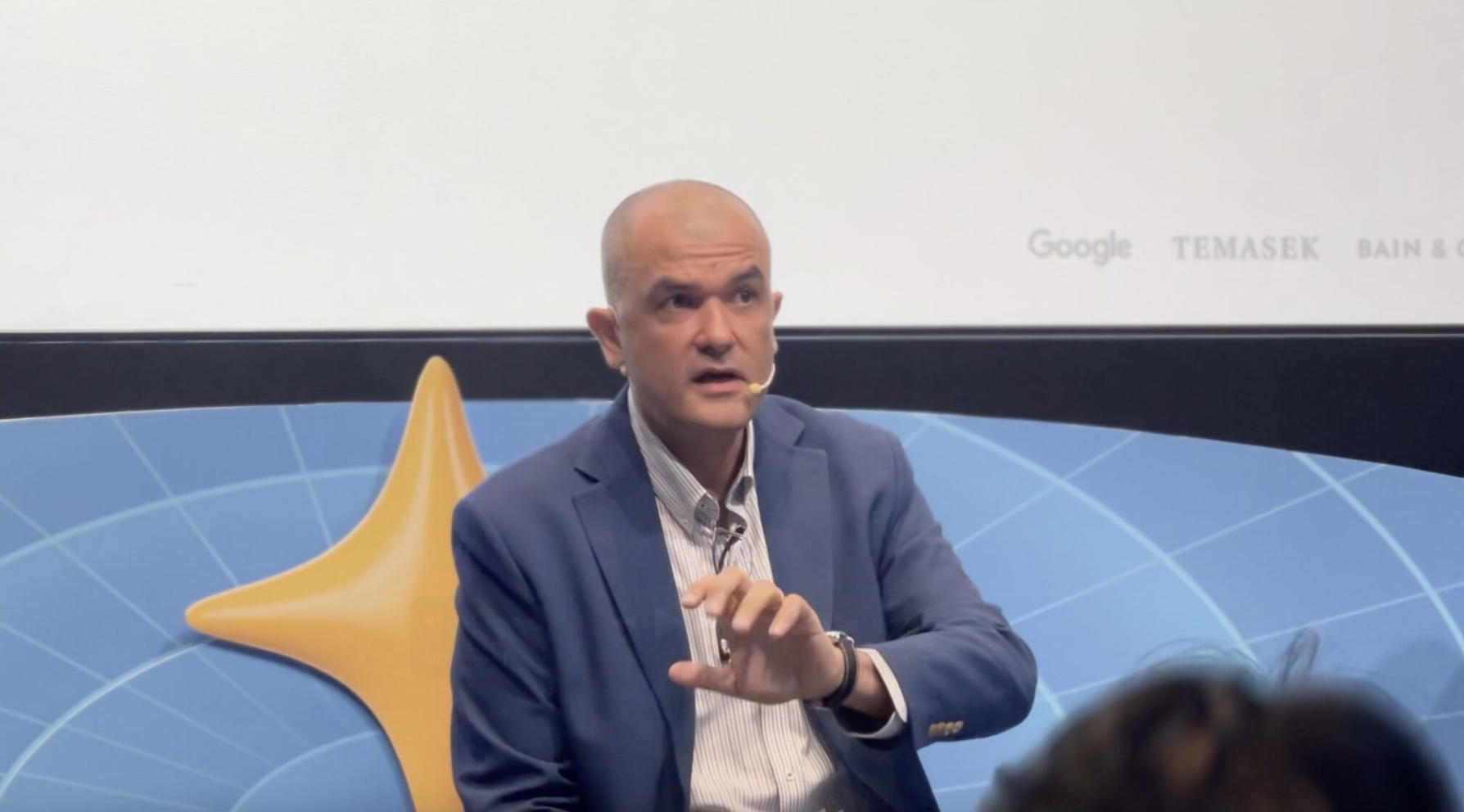
At the report’s launch, Nitin Gajria, Managing Director for Southeast Asia and South Asia Frontier Markets at Google, drew a parallel with the internet’s earlier rise.
“We’ve seen this movie before,” he said: investment in infrastructure drives adoption, deeper use and eventually new business models. AI could follow the same path.
From Southeast Asia’s digital decade to its AI decade
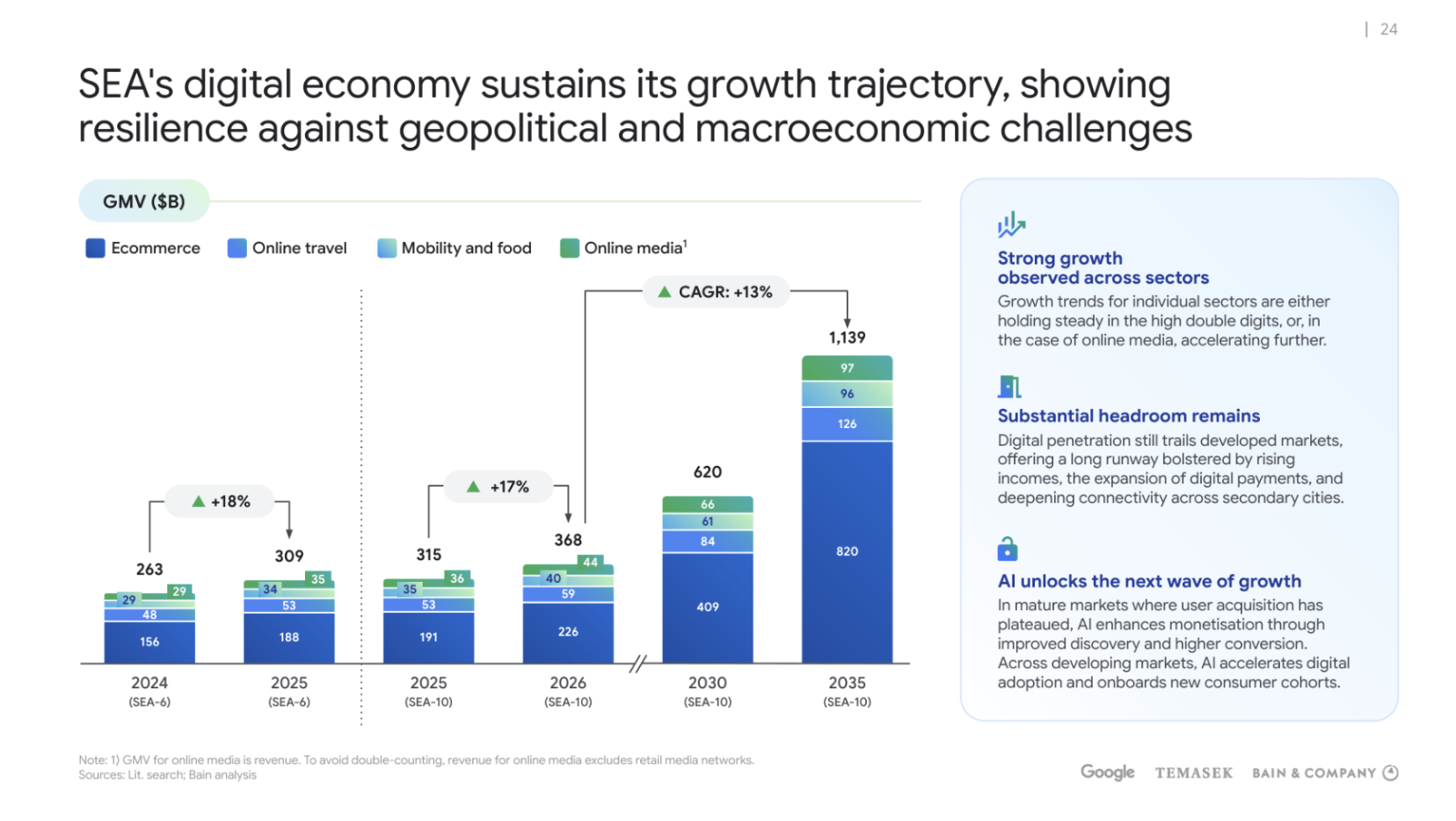
FIGURE 1. Growth across Southeast Asia’s core digital sectors. Source: Google, Temasek & Bain, e-Conomy SEA 2026, p. 24.
Southeast Asia’s digital economy is projected to reach US$368 billion in GMV in 2026, up 17%, and exceed US$1 trillion by 2035. These figures cover the wider digital economy, not travel alone.
Gajria called 2026 an inflection point from the digital decade to the AI decade. An estimated 243 million people across six Southeast Asian markets used standalone GenAI in the past month — 58% of their working-age population.
Adoption, however, is not the same as usage or revenue. Gajria asked: “How often am I using AI and how much am I using AI?” Regional token use per person remains about one-tenth of US levels. Consumer activity accounts for roughly 60% of usage, although Singapore and Malaysia have stronger enterprise uptake.

Florian Hoppe, Partner at Bain & Company, similarly stressed in comments accompanying the report that the next phase depends on moving beyond occasional use. For travel companies, the test is whether AI improves repeated journeys from research to service.
The commercial question is who captures that value.
Online travel reaches US$59 billion — but growth needs unpacking
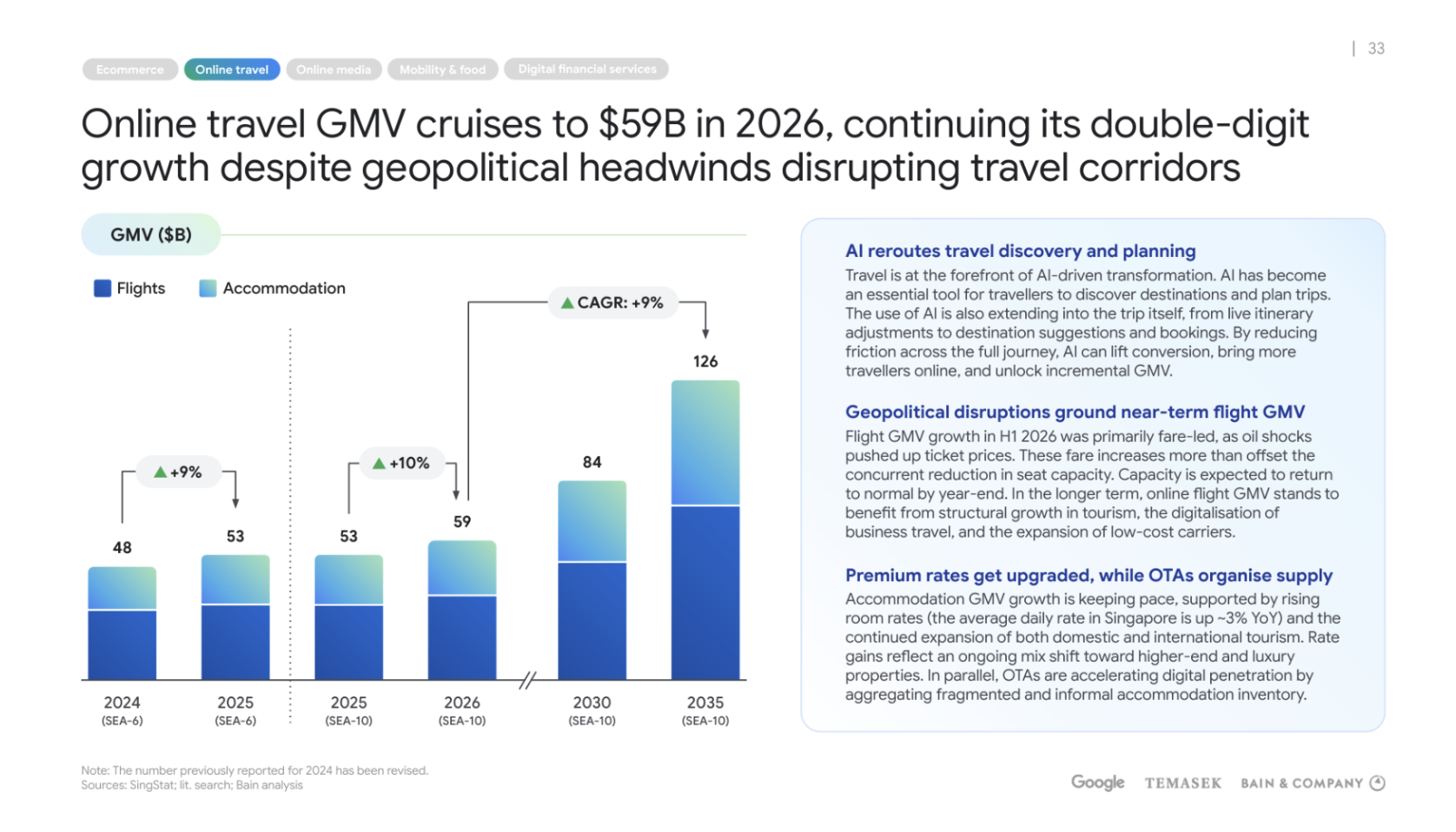
FIGURE 2. Online travel GMV and the forces behind its 2026 growth. Source: Google, Temasek & Bain, e-Conomy SEA 2026, p. 33.
Online travel GMV is projected to increase from US$53 billion in 2025 to US$59 billion in 2026, about 10% growth, then reach US$84 billion in 2030 and US$126 billion in 2035.
Air travel growth in the first half was partly fare-driven after oil-price shocks, even as seat capacity was constrained. Higher GMV therefore does not necessarily mean more passengers. Longer-term growth depends on capacity recovery, low-cost carriers and tourism demand.
Accommodation, meanwhile, benefits from higher room rates, more premium stays and OTAs digitising fragmented supply. Singapore room rates rose approximately 3% year on year, according to the report.
Hoppe described travel as resilient despite disruption. But for hotels, airlines and distributors, US$59 billion in bookings is not US$59 billion in revenue or profit — and growth must be read alongside prices, capacity and volume.
The biggest change is before the booking button
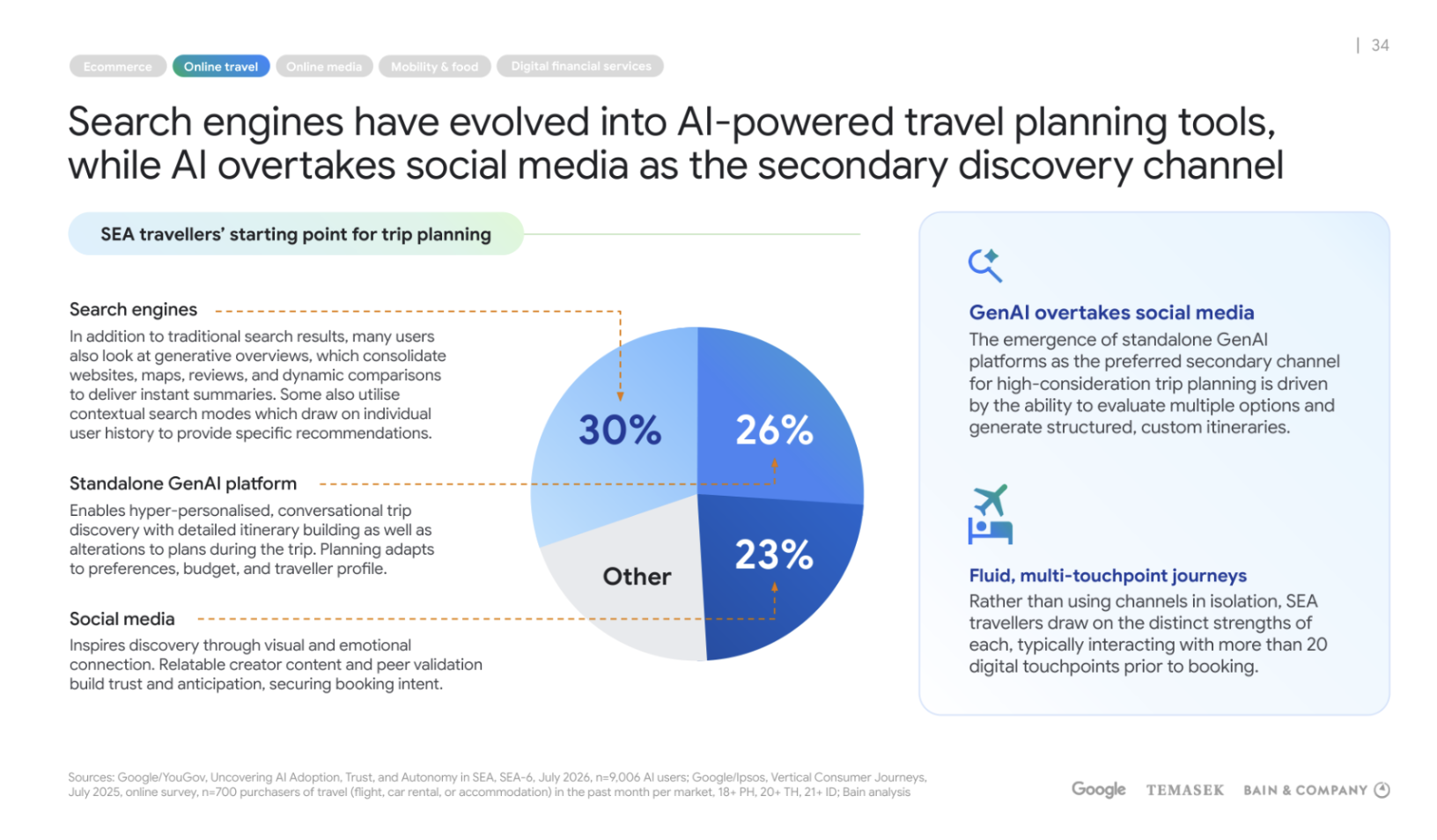
FIGURE 3. Trip-planning starting points: search, GenAI and social media. Source: Google, Temasek & Bain, e-Conomy SEA 2026, p. 34.
The change is not simply that AI replaces search: search engines themselves increasingly offer AI overviews, maps, reviews and comparisons. GenAI enables more conversational evaluation, while social media remains powerful for visual inspiration.
The report credits creators and peer recommendations with building anticipation and trust. AI helps travellers compare choices and assemble itineraries around budgets and preferences; the two roles can reinforce each other.
A traveller might discover a hotel in a video, ask AI to compare it with alternatives, check reviews and book through an OTA. The more-than-20-touchpoint journey means no single channel necessarily owns the decision.
The challenge for travel marketers is to remain visible and credible across that journey, rather than betting on one interface.
In the launch Q&A, a technology creator asked how AI comparisons might affect creators and merchants. Relatable content and peer validation still support booking intent.
AI leads discovery. OTAs still own much of the transaction
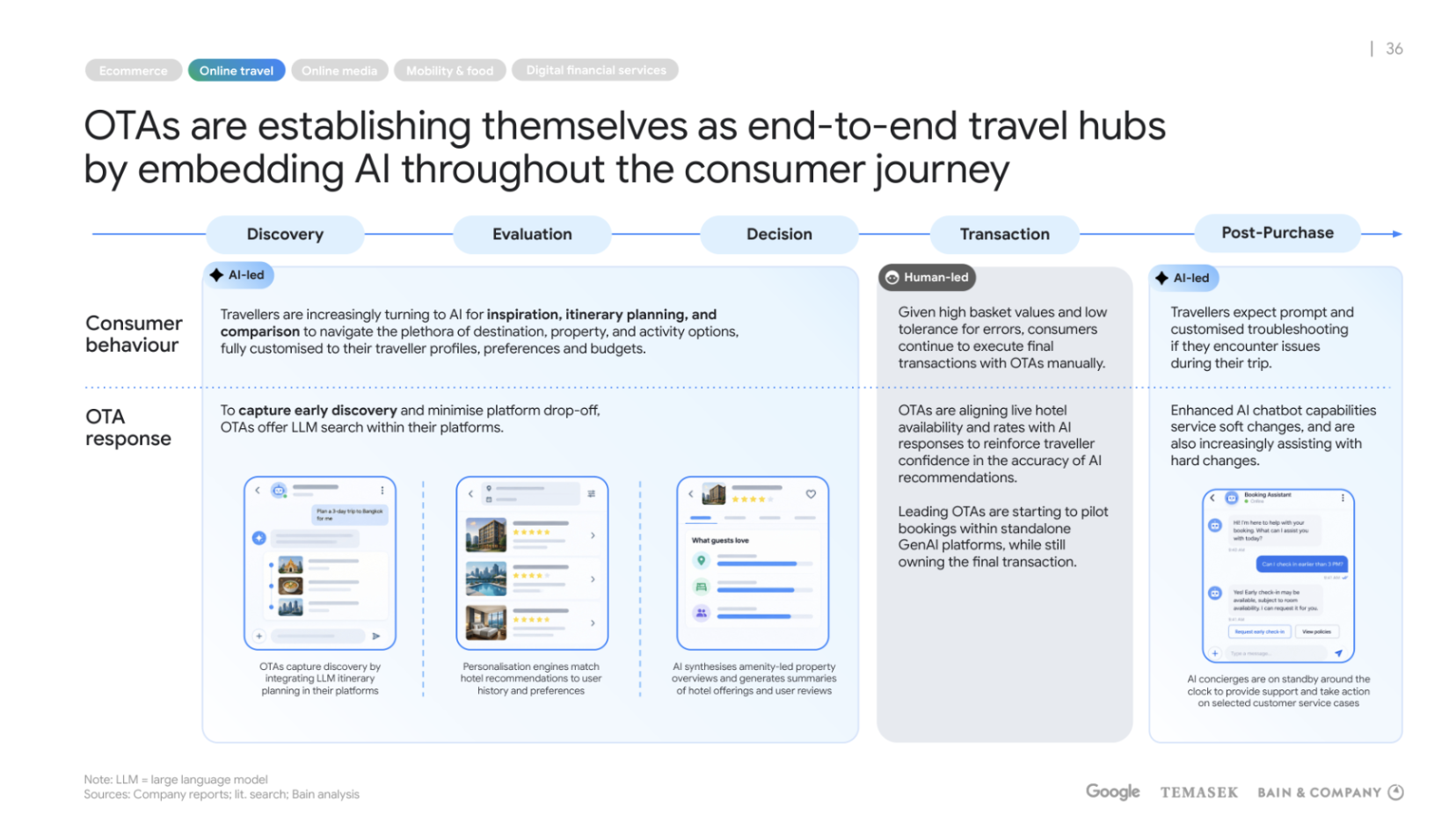
FIGURE 4. How OTAs are embedding AI from discovery through post-purchase. Source: Google, Temasek & Bain, e-Conomy SEA 2026, p. 36.
AI is already widely used to research destinations and plan itineraries. Completing, changing or cancelling high-value travel bookings through AI remains much less established.
The report shows an AI-led discovery and evaluation journey but a largely human-led transaction. Travellers hesitate to delegate expensive purchases when a wrong date, fare or cancellation can have real consequences.
OTAs are responding with conversational search, personalised recommendations and AI-generated summaries of hotels and reviews. Yet a useful recommendation still needs live rates, available inventory and fulfilment.
Some OTAs are piloting bookings initiated in standalone GenAI services while retaining control of the transaction — a sign that the interface and the booking platform need not be the same.
As Hoppe put it in the statement accompanying the report, the differentiator is “how fast they embed it across the customer journey, from discovery to conversion”. For travel platforms, the winning feature is the one that helps a guest complete a real booking and resolve problems.
Distribution remains the OTA advantage
AI recommendations do not replace supplier integrations. Regional and global OTAs, alongside direct airline and hotel channels, still compete on inventory depth, bookable rates and service.
The same applies to tours and attractions, where fragmented supply makes accurate content, availability and fulfilment particularly important.
Advertising follows the traveller closer to purchase
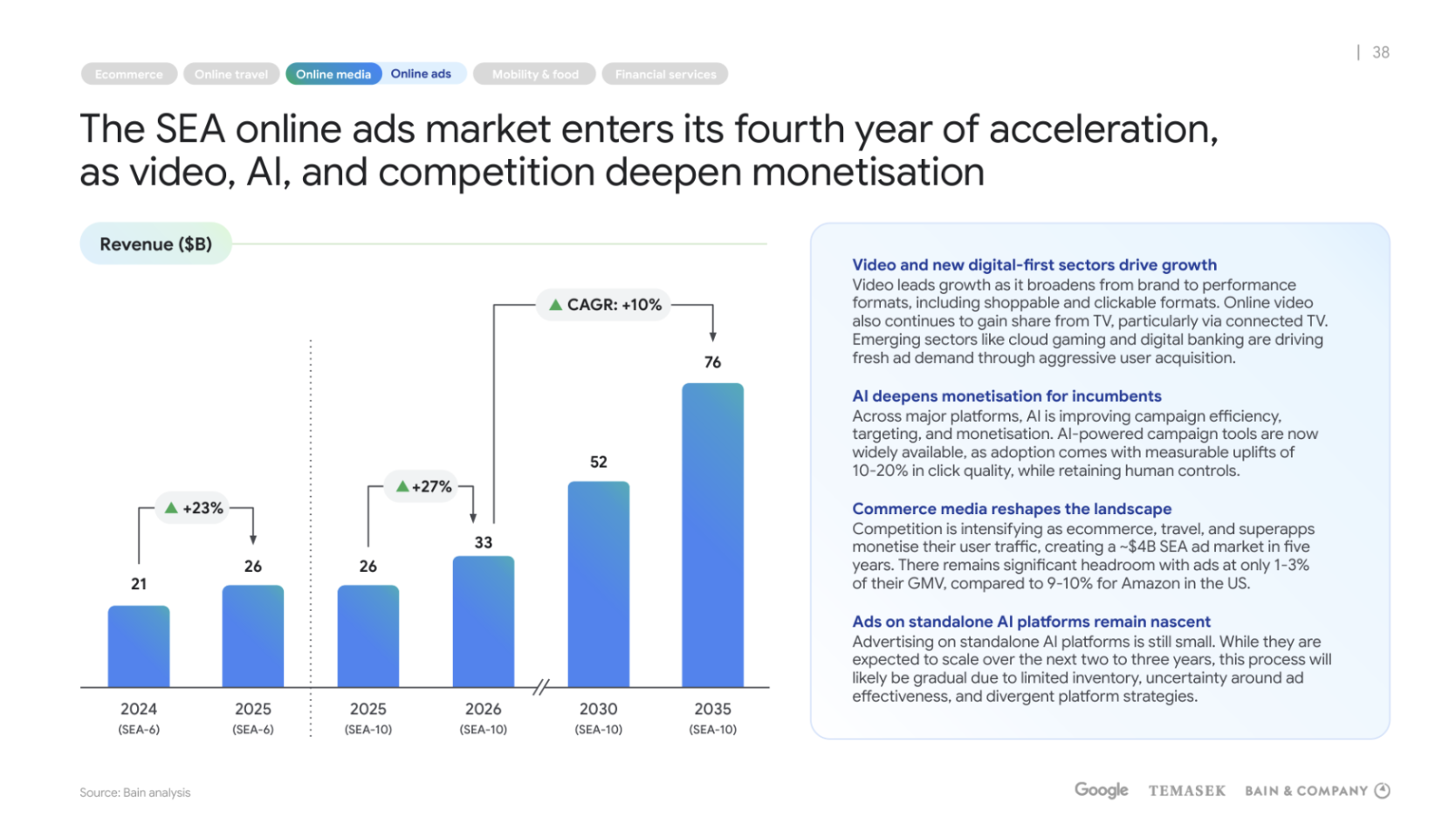
FIGURE 5. Online advertising growth and the emergence of commerce media. Source: Google, Temasek & Bain, e-Conomy SEA 2026, p. 38.
Gajria expects more commercial models to emerge around AI. Online media revenue is projected at US$44 billion in 2026, including US$33 billion from online advertising. Video, AI targeting and competition are supporting growth.
The report cites a 10–20% uplift in click quality for some AI-powered campaign tools, though not specifically for travel advertisers.
Commerce media is another opportunity: travel platforms, superapps and marketplaces can sell advertising near the point of purchase. The report sees this becoming roughly a US$4 billion Southeast Asian market within five years.
For OTAs, that adds potential advertising income alongside booking commissions. For suppliers, the question is whether it produces qualified demand.
Advertising inside standalone AI assistants is far less mature. The report expects gradual development over the next two to three years; AI-improved ads should not be confused with ads inside AI conversations.
Investment is moving towards AI. Returns still have to follow
AI-focused businesses accounted for about 80% of private digital-company funding in Southeast Asia in the first half of 2026. Infrastructure and compute investment also increased. These are economy-wide figures, not travel-sector funding totals.

For Fock Wai Hoong, Head of Asia Pacific (ex. China and India) at Temasek Global Investments, growth requires “strong governance, disciplined execution, and resilient business models”, according to Temasek’s statement. For travel, that means measuring AI by profitable bookings, lower service costs and reliable operations — not feature launches.
The payment rails may change faster than the booking interface
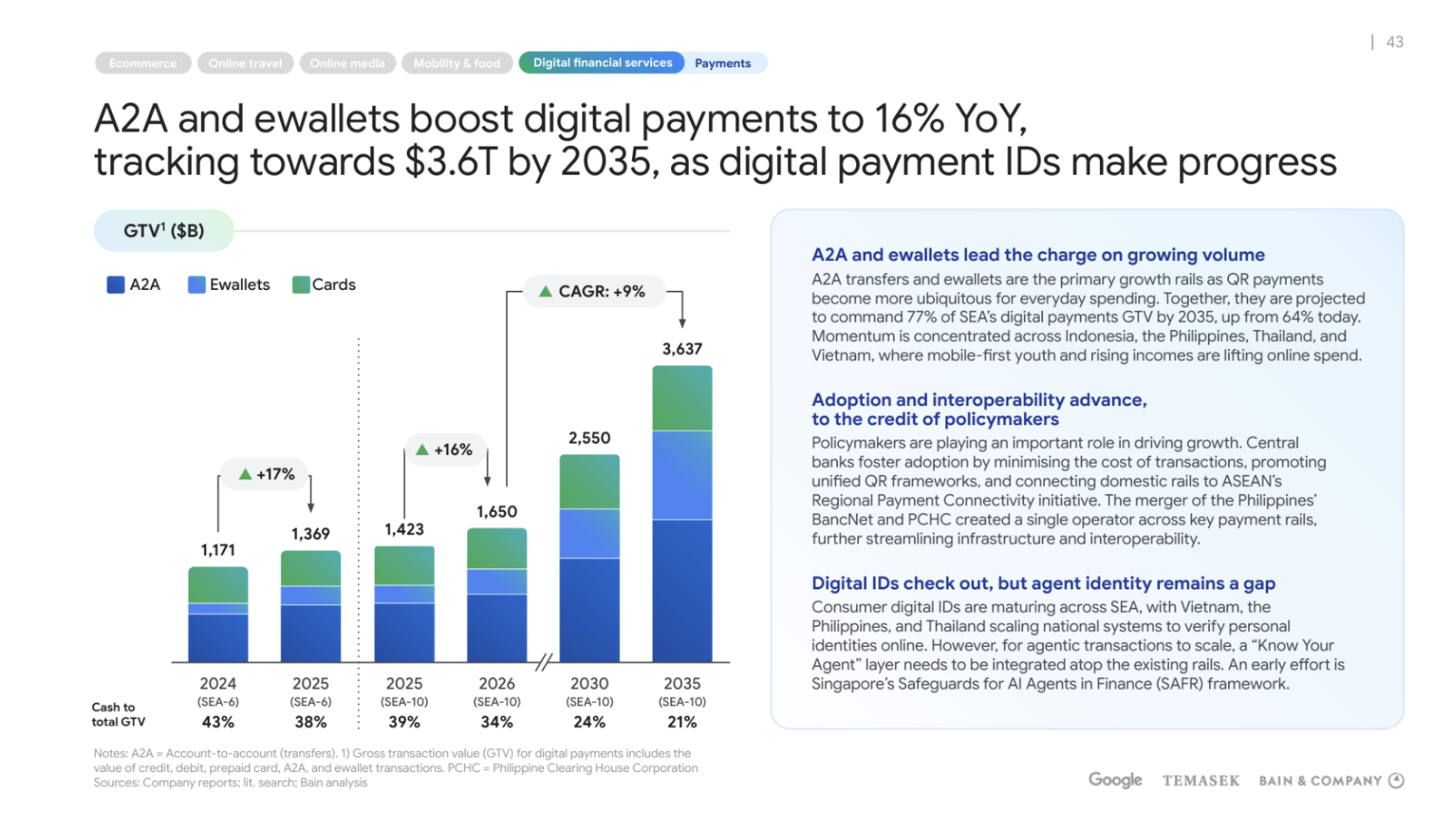
FIGURE 6. Digital payment growth and the changing balance of payment rails. Source: Google, Temasek & Bain, e-Conomy SEA 2026, p. 43.
Digital payments are projected to reach US$1.65 trillion in transaction value in 2026, up 16%. Account-to-account transfers and ewallets now account for 64% of digital payment value; the report projects 77% by 2035.
For travel, local payment preferences, cross-border settlement, authentication and refunds matter as much as the checkout interface — especially if AI agents begin transacting for customers.
The unresolved requirement is knowing who authorised a transaction. The report points to a potential “Know Your Agent” layer to verify an agent’s identity and authority, alongside safeguards to reverse errors.
Will travellers actually let AI book the trip?
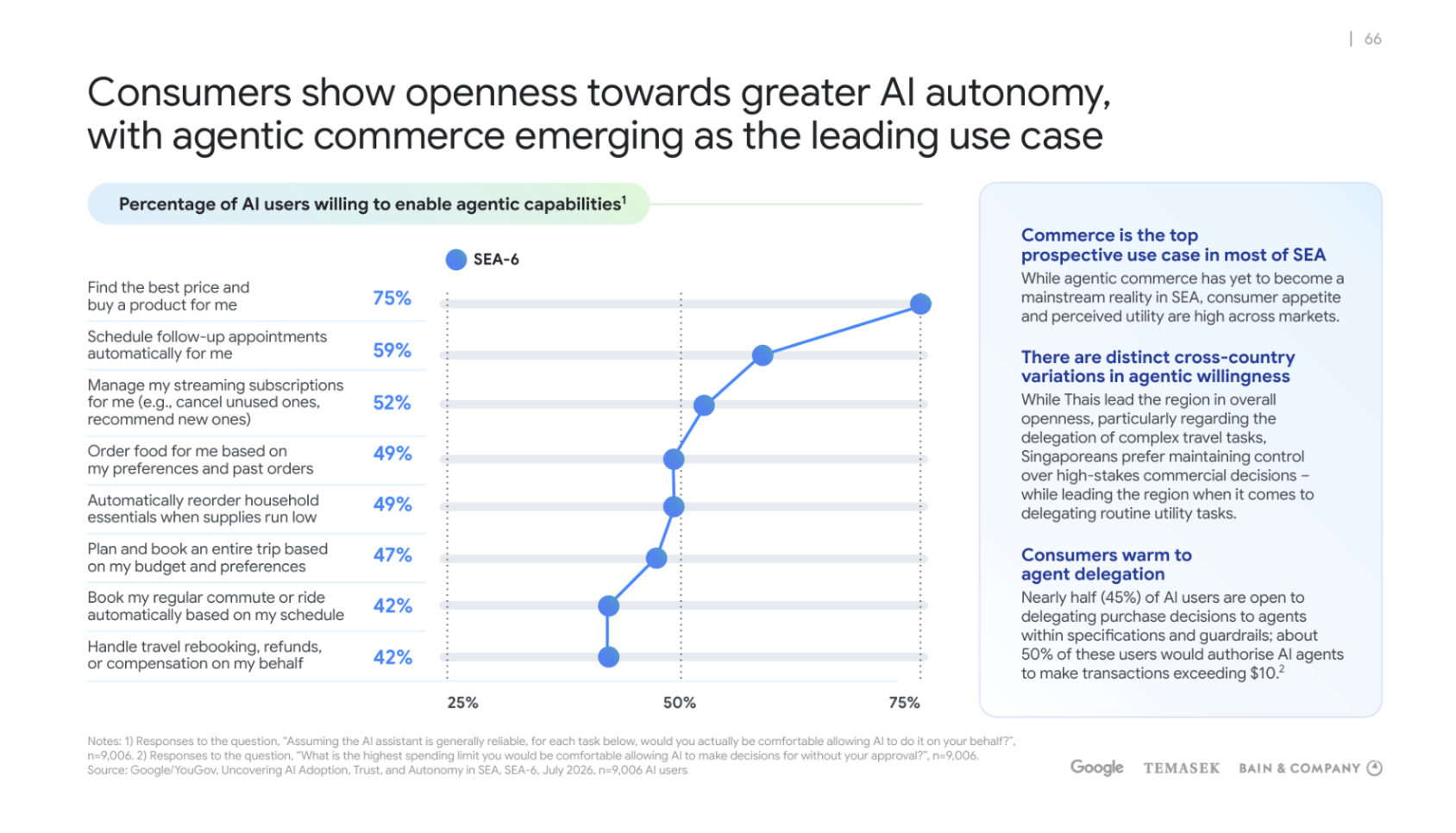
FIGURE 7. Consumer willingness to delegate travel and commerce tasks to AI. Source: Google, Temasek & Bain, e-Conomy SEA 2026, p. 66.
Gajria described consumers’ stance as “pragmatic optimism”: interest in useful automation, with trust still a condition.
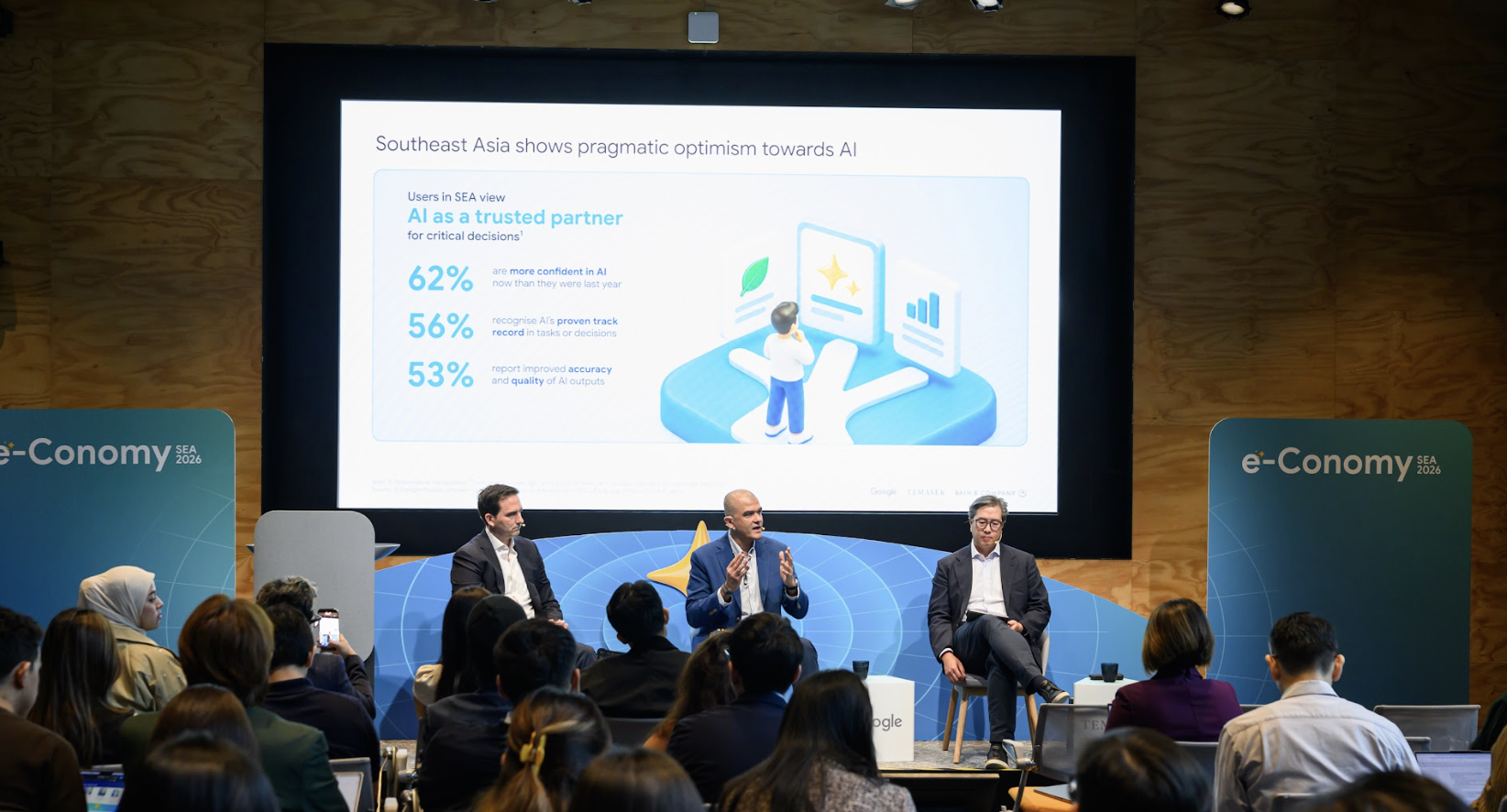
The report finds that 72% of surveyed AI users already use everyday automation, such as price alerts. While 75% would let a generally reliable agent find and buy a product, only 47% would allow one to plan and book an entire trip; 42% would delegate travel rebooking or refunds.
These are stated intentions, not evidence of actual agent-booked trips.
Gajria said the next phase “can be summarised in one word”: “trust”. Agents, he argued, are the next level of automation, but they need a trusted foundation.
Among safeguards that would increase willingness to delegate, 44% selected strong privacy protections, 36% clear limits on what AI can do and 30% the ability to reverse actions.
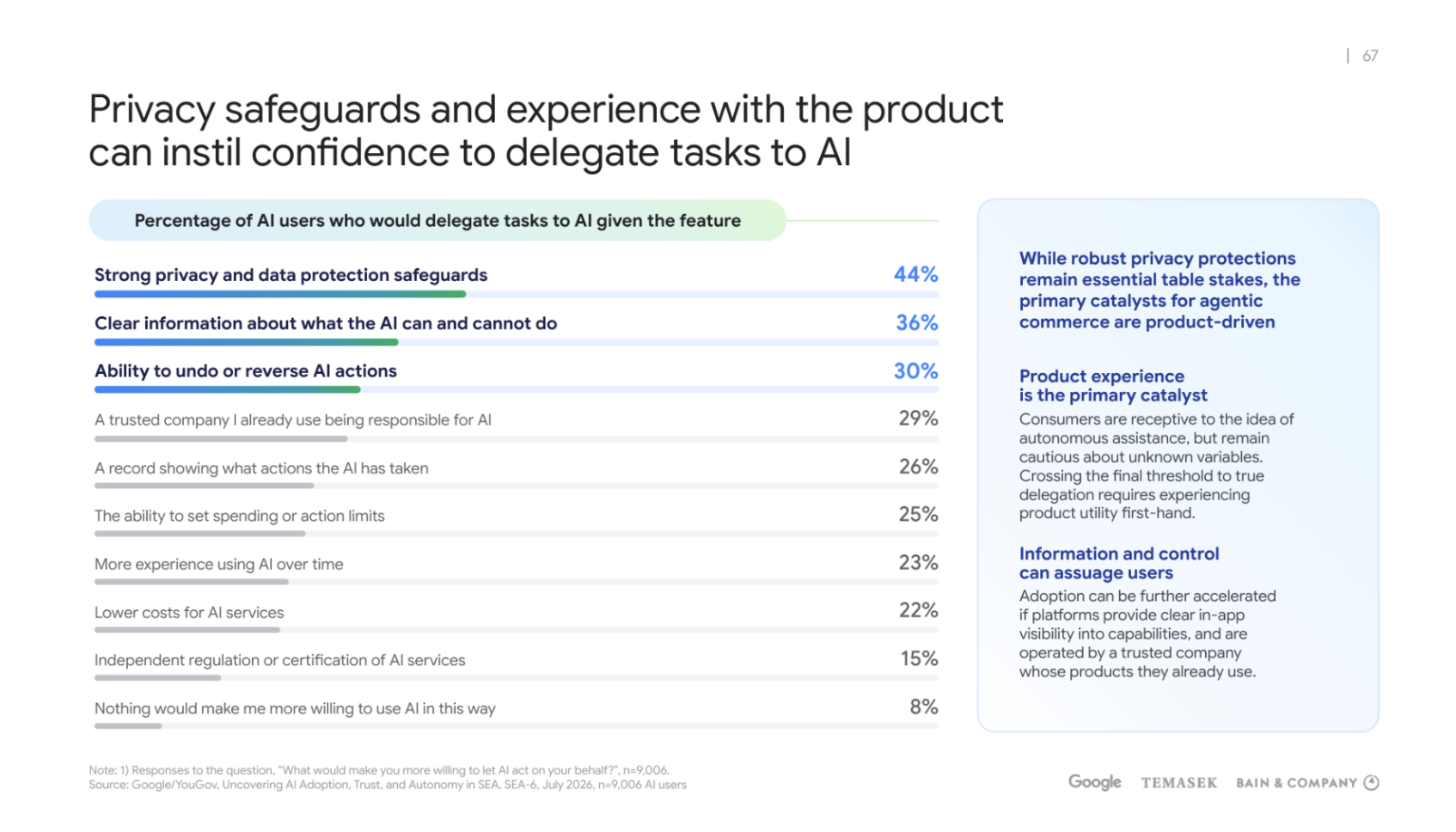
FIGURE 8. Safeguards that could build confidence in AI agents. Source: Google, Temasek & Bain, e-Conomy SEA 2026, p. 67.
For travel companies, that raises a practical test: when an agent makes the wrong booking, who is accountable — and can the customer undo it?
The next travel platform may win on trust, not just traffic
The report projects that Southeast Asia’s AI usage could grow by as much as 60 times by 2030. That is a scenario dependent on broader adoption, more frequent and complex tasks, better model efficiency, expanded infrastructure and sustainable economics — not a guaranteed outcome.
The travel findings offer a more immediate measure of progress. GenAI has already become a major starting point for trip planning. OTAs are adapting their products to keep discovery connected to transactions. Advertising platforms are refining how suppliers reach customers, while payment systems and identity safeguards are preparing for the possibility of autonomous purchases.
But a traveller still has to arrive at a real hotel, board a real flight or join a real experience. Google’s consumer lens, Bain’s commercial lens and Temasek’s investment perspective converge on one point: accurate inventory, reliable payment, service and accountability are what turn a promising answer into a completed trip. The evidence points less to the disappearance of online travel intermediaries than to a reshuffling of the work they must perform — and where in the journey they must prove their value.