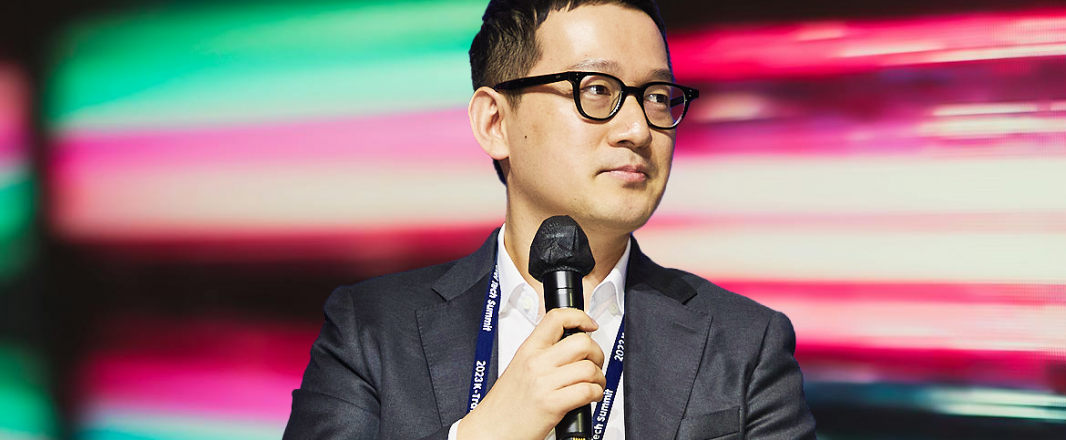
During a session titled ‘From Startup to Scaleup’ at WiT Seoul, Donggun Lee, CEO and founder of MyRealTrip, was invited to break his story down into its own ‘hero’s journey’. Popularised by author and mythologist Joseph Campbell in the 1940s, the Hero’s Journey concept suggests that every great story involves a hero who goes on an adventure, emerges victorious from a defining crisis, and then returns home changed for the better.
It’s not uncommon to see entrepreneurs describe their ventures with this template – the ups, downs, destruction and rebirth of their hard work that eventually brought them to success.
As for Donggun and MyRealTrip, from its humble beginnings as a tours and activities platform for South Korean travellers, the company has evolved into a full-fledged Online Travel Agency (OTA), even embracing the physical retail space. Starting with just two employees in 2012, the company is now 300 strong.
The question is, what prompted this online maven to turn his sights to brick and mortar?
The call to adventure
Donggun Lee’s journey began as a quest for post-graduation clarity. Through a series of internships across diverse industries, he sought to find his path. After a failed attempt at a crowdfunding startup, he returned to the entrepreneurial scene with MyRealTrip in his junior year. Lee emphasises the importance of committing 100%, a lesson learned from his initial failure.
“The real problem is I’m not that confident about what I am doing”, admitted Donggun about his initial startup. “I’m not that committed to my first startup. I think that’s the biggest reason why my first startup failed. When I did my second startup, MyRealTrip, I decided to commit 100%.”
Initially focused on connecting tour guides with travellers, MyRealTrip witnessed its first significant transformation in 2017. Recognising the need for increased traffic, Donggun ventured into selling flight tickets at competitive prices, expanding the company’s offerings to include flights, accommodations, and more.
The shift towards offering flight tickets was likened to a leap of faith in pursuit of more significant market share. When probed about any regrets regarding this decision, to Donggun candidly responded, “Actually, flight is really tough. In terms of profit, it is tough. In terms of technology, it is also very difficult.”
He continued, “There are many ways to get the traffic from other channels like I can spend the money on NAVER, Google, Facebook or Instagram, but I think spending money on the flight is the most efficient way of getting the right traffic.”
Balancing risk and reward
It’s interesting to note that by taking a piece of the ‘flight pie’, Donggun may be giving up prime real estate in the highly lucrative tours and activities scene – a market worth $250 billion to be exact. Flight, as everyone in travel knows, is a space that’s highly competitive, complicated, and not for the faint of heart.
“If I made this decision too early, it can be a very bad choice,” admits Donggun. “For example, if I launched this business in 2014 or 2013, it would be too early for us because we couldn’t make a specific position in the tourism activity field. But after five years of focusing on tours and activities, we gained confidence and now it’s time to expand our service.”
Donggun detailed the challenges, highlighting the complexity of managing a flight system with a team of just 10 engineers. He also expressed gratitude for the support from GDS partners like Amadeus and Topas, acknowledging their pivotal role in overcoming technological hurdles.
Navigating the abyss and adapting to a post-COVID landscape
The COVID-19 pandemic proved a profound challenge for the travel industry, forcing MyRealTrip to pivot and adapt. Donggun reflects on the uncertainty during the early days of the pandemic and the importance of accepting reality. The company successfully raised funds during this tumultuous period and pivoted towards domestic travel, finding profitability amid the chaos.
“After accepting the reality, I made a plan for another fundraising and I made a business plan for domestic travel,” shared Donggun.
“The one thing about the domestic market is it can boost the frequency. When MyRealTrip was doing outbound business only, customer retention and frequency was a really big problem because travellers go abroad just once a year. But domestic travel, at least four times a year.”
“We want to expand our customer base, because MyRealTrip is doing quite well for free independent travelers aged from 20s to 40s. But travellers over 50s prefer to book group package tours via offline retail stores,” Donggun revealed.
“So it is a totally different concept because we are only strong in the online field. For example, my parents, they never used MyRealTrip for 11 years!”
Embracing the offline travel retail space
“I asked my parents, why don’t you use a mobile app… because my parents can use delivery apps or shopping or secondhand marketplace. They are very mobile savvy but they don’t buy travel products on mobile,” Donggun shared, candidly.
Donggun’s embracement of brick and mortar is part of an ongoing trend that challenges the notion that there’s no future offline. Contrary to popular belief, many online brands are now seeking an omnichannel presence, opting to have physical touchpoints where possible.
According to an article on Entrepreneur earlier this year: Physical engagement is necessary for what some researchers have described as “deep” products. These products “require ample inspection for the customer to make an informed decision.” Items like shoes, glasses, headphones and furniture require that extra tactile interaction to determine if they fit. You don’t get this in a solely digital transaction.
Travel is quite easily a “deep” product, especially if it’s meticulous and expensive.
“My parents told me that when they buy expensive things they never use online,” said Donggun. “So I realized the importance of understanding the customers who are aged over 50. That’s why we are penetrating offline retailers.”
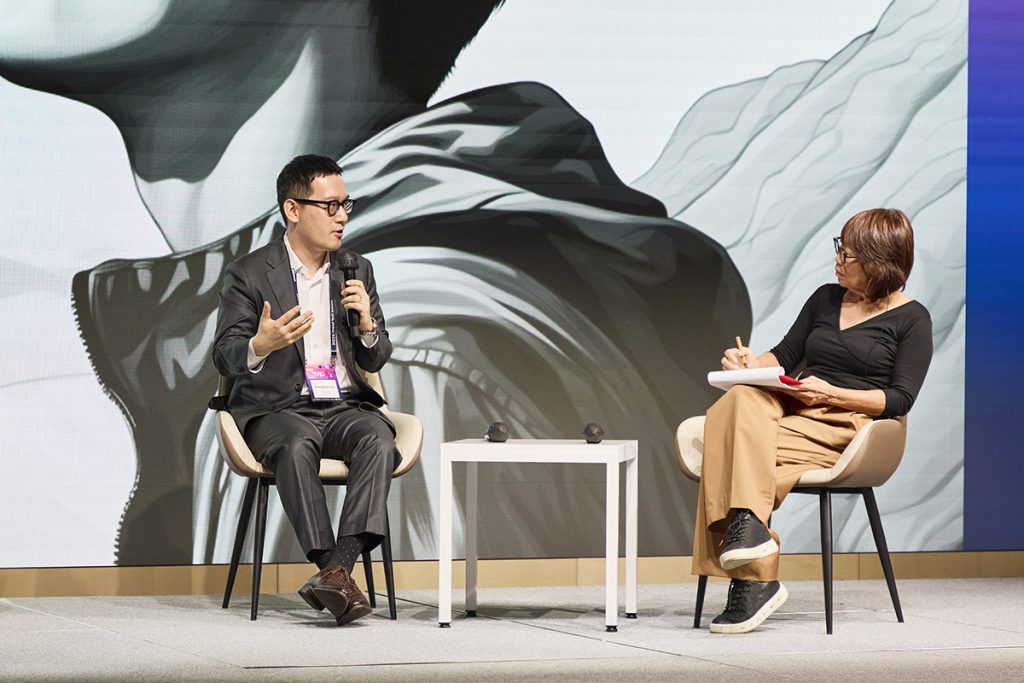
“We want to expand our customer base, because MyRealTrip is doing quite well for free independent travelers aged from 20s to 40s. But travellers over 50s prefer to book group package tours via offline retail stores,” Donggun Lee, CEO and founder of MyRealTrip, revealed at WiT Seoul 2023
Atonement: Balancing investor expectations
Having raised $100 million through multiple funding rounds, Donggun acknowledged the dilution of his shares but emphasised the understanding of investors amidst the lingering effects of COVID-19. “I’m still the largest shareholder, but diluted,” said Donggun. MyRealTrip reached the break-even point in July, showcasing its potential for profitability.
“This is the time to prove that we are very profitable. Actually, in July, we were literally at the break-even point line. So, we prove ourselves. If we want to be profitable, we can be profitable.”
Return to the top: Embracing AI and the future
Looking ahead, Donggun believes that Artificial Intelligence will define the next wave of technological and travel innovations, much like the mobile revolution did before. He sees AI as a crucial component in making travel experiences more efficient and convenient. MyRealTrip’s foray into tailoring experiences for different demographics, including families and K-culture enthusiasts, reflects the company’s commitment to evolving with changing consumer preferences.
Boldly, Donggun claims that he won’t accept M&A (mergers and acquisitions) offers at this time. “I will not accept because I think in two years, three years, we can be bigger.”
“This is the time I waited for 10 years as an entrepreneur. This is a really exciting time because the paradigm is changing. AI is evolving and AI will affect the travel industry. I want to use the technology to develop MyRealTrip. So, I will not accept.”
Reflecting on his journey, Donggun emphasises the importance of soft skills for the next generation, acknowledging the unpredictable nature of the world. Looking forward, he envisions contributing to addressing global challenges such as climate issues and social problems.
“I think [studying something] is not a smartest way of educating my son because the world is so unpredictable and so vague. I think if I gave a lesson for my son, I will say that adaptability and flexibility is the most important factor for surviving the next generation.”