
In an industry where sustainability and authentic experiences are increasingly sought after, some entrepreneurs, operating in niche spaces, have dedicated themselves to creating unique, meaningful experiences rooted in their love for their communities.
These creators— Eric Chong, Li-Chin Kuo, Jane Iyer, and Henry Sun— shared their stories, challenges, and visions for a more diverse tours and attractions landscape in a recent panel at last month’s WiT Indie in Penang, moderated by Sarah Wan, General Manager for Indonesia, Malaysia, and Singapore at Klook.
Finding the why; building purpose-driven communities
Eric Chong, owner of Green Acres in Penang, Malaysia, is an advocate of sustainability and describes his farm as not just organic but regenerative, with a focus on maintaining the delicate balance of the environment. “Sustainability means holding on to what we have,” Chong explained. He emphasised how his farm, which is cooler than the surrounding areas and uses solar power, is an example of how modern agriculture can coexist with nature.
However, his efforts to engage with neighboring farmers about sustainable practices have often been met with skepticism. “They think spraying (pesticides) is the best,” he shared, noting that his neighbors see his methods as unconventional.
Education is a significant part of Chong’s mission. In collaboration with the Habitat Foundation, Green Acres hosts school children from local rural areas, many of whom are unfamiliar with basic fruits like chikoo and calamansi lime. “It’s surprising how little they know about the food they eat, but their response has been very positive. They are open and receptive, which gives me hope,” Chong shares.
In Taiwan, Li-Chin Kuo has been running the Taitung Slow Food Festival for over seven years. What started as an effort to revitalise the local community has evolved into a zero-waste festival, where sustainability is not just a theme but a brand identity. “We try to encourage people to bring their own tableware, and it has become a fashion,” Kuo said. The festival attracts a mix of local and international visitors, particularly digital nomads and foreign residents who appreciate its eco-friendly approach. Kuo is now focused on expanding the festival’s reach, with plans to promote it in Taipei to attract a global audience.
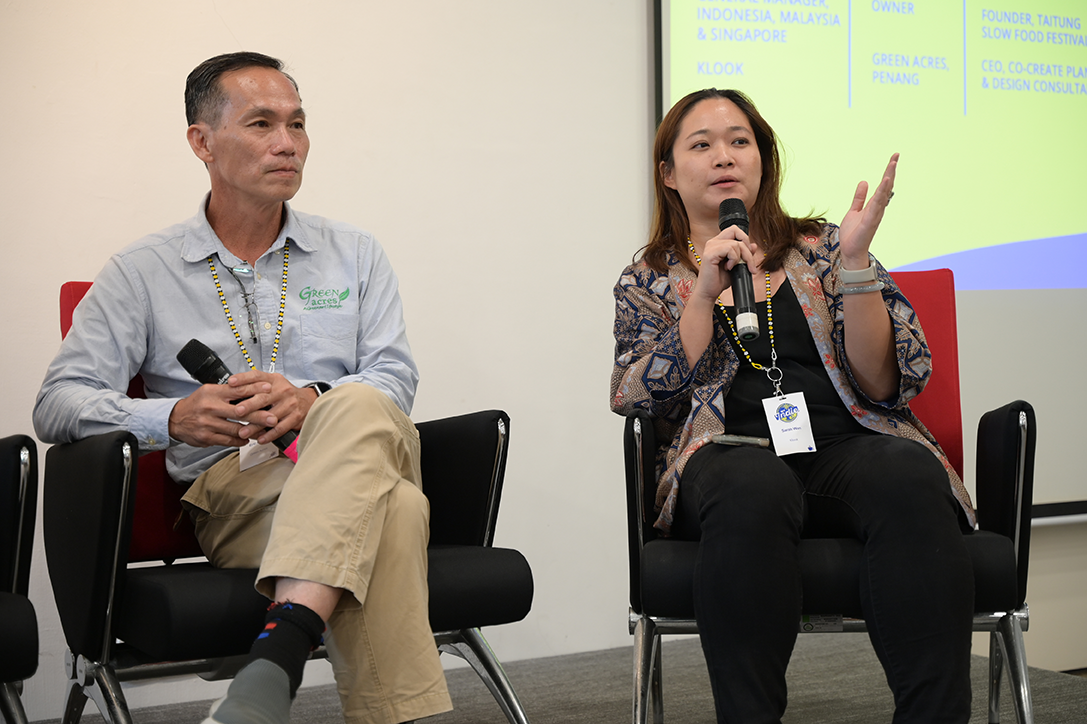
“It’s surprising how little they know about the food they eat, but their response has been very positive. They are open and receptive, which gives me hope,” Eric Chong (left) shared.
Jane Iyer, founder and CEO of Jane’s Singapore Tours, has carved out a niche in the tourism industry by offering high-quality, in-depth cultural and heritage tours. Iyer’s approach to tourism is driven by a passion for Singapore’s rich history. “If you’re going to charge a bit more, you’re going to pay a bit more to the guides,” Iyer stated, underscoring her commitment to fair wages. While her tours attract mostly Western tourists, Iyer remains hopeful that Asian markets will come to appreciate the deeper cultural experiences her company offers. “I think there’s an opportunity there for us, even in tiny, tiny Singapore,” she said.
Meanwhile, Henry Sun, COO and founder of Stunning Taiwan Travel, a local Destination Management Company (DMC), is reshaping how travellers experience Taiwan through immersive and authentic tours.
“We pride ourselves as a travel agency grown from the community,” Sun explained. Stunning Taiwan Travel is committed to training local residents – whether they are returning youths or elderly people – to become skilled tour guides. These guides are not just knowledgeable about the locations but are also trained in specialised areas such as photography, cycling, and forest therapy.
“After you took pictures with the flowers, have you seen the frogs? Have you seen the snake in our gardens?” he shares, illustrating the joy that farmers feel when wildlife returns to their land. According to Sun, this hands-on approach not only educates tourists but also fosters a deeper connection between visitors and the environment.
Challenges of scaling specialised tourism
Sun highlighted the challenges of scaling niche travel experiences, such as photography and cycling tours. “It’s really hard to find and train tour guides who can actually go on-site and show people around,” Sun said. “Tourism is not only about economics; we can also bring something good by bringing people to learn more about the land,” he emphasised.
Another key challenge Sun faces is the scalability of these themed tours. “It’s really hard to scale because it’s quite pricey in some ways,” he acknowledges. Additionally, finding and training tour guides who can provide the level of expertise required is no small feat.
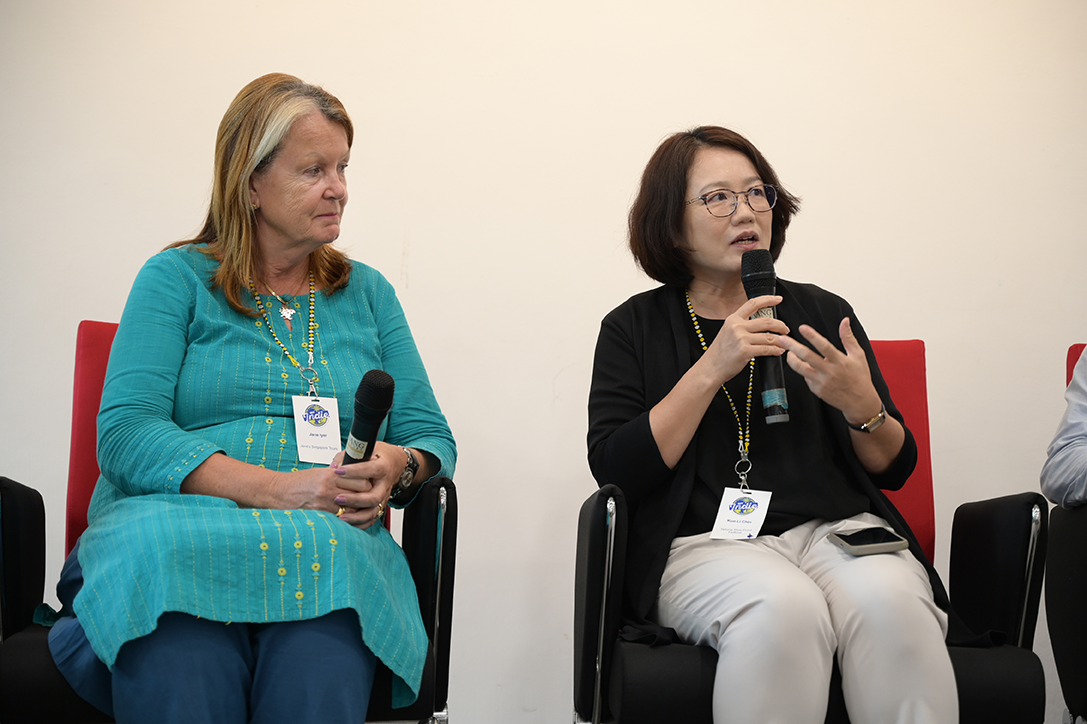
“Sustainability has become a recognition of our festival. People are proud to say they attended the Taitung Slow Food Festival and left nothing behind,” Kuo remarked.
And because they’re so dependent on the environment, nature plays a big part in the way sustainable tourism is managed.
“Durian seasons have been shifting, and it’s clear that if we don’t take action, sustainability in farming will be at risk,” Chong adds. He emphasises that sustainability means preserving the natural environment, which is why Green Acres maintains a cooler microclimate and filters water through natural processes. “The air and water at the farm are so clean that when you bathe in it, you don’t even need soap,” he adds, highlighting the purity of the environment he strives to maintain.
Meanwhile, Kuo recalled the initial challenges with waste management, which led to a change in how the event was organized. “In the very beginning, there was too much garbage left after the festival,” she explained. This realisation spurred the organisers to strive for a zero-waste event. Attendees were encouraged to bring their own tableware or use natural alternatives. This shift not only reduced waste but also became a point of pride for participants. “Sustainability has become a recognition of our festival. People are proud to say they attended the Taitung Slow Food Festival and left nothing behind,” Kuo remarked.
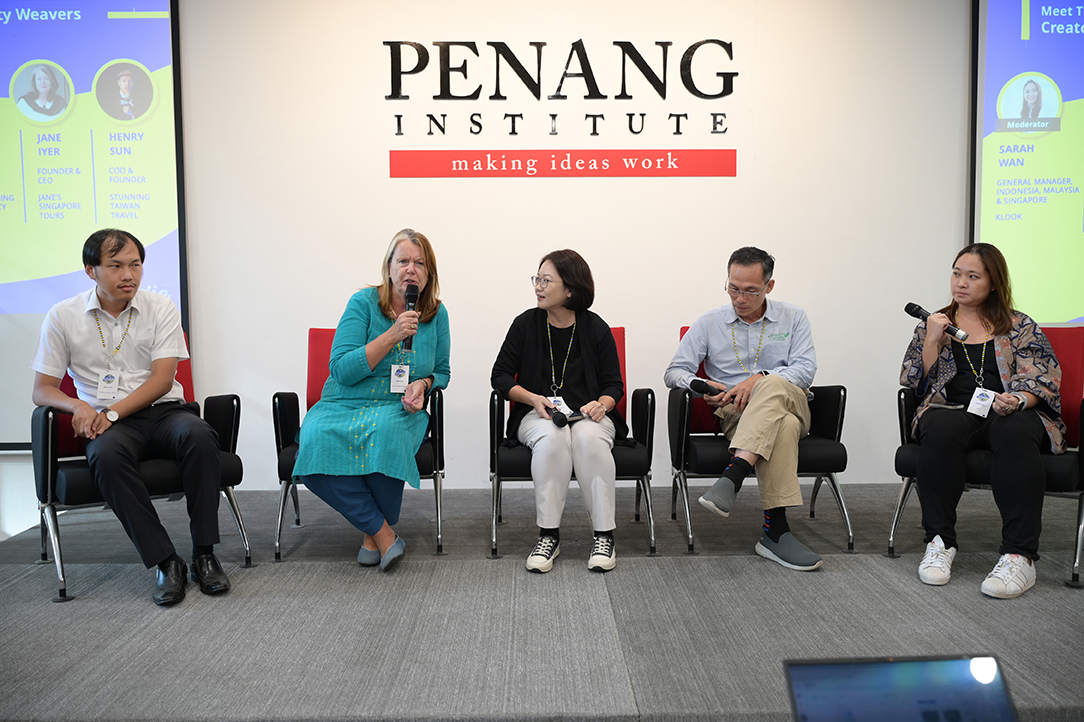
From left to right: Henry Sun, Jane Iyer, Li-Chin Kuo, Eric Chong, Sarah Wan (Moderator)
Technology and the human touch
As the conversation shifted to technology, Li-Chin Kuo shared how the Taitung Slow Food Festival incorporates live cameras and 720-degree panoramas to enhance storytelling and provide a more immersive experience for attendees. “You can understand the story of the shops, the cooks, and support them by buying from them directly,” she explained. This integration of technology has allowed the festival to connect with a broader audience and enrich the visitor experience. “We’re trying to integrate all possible experiences into one,” Kuo said.
Meanwhile, Jane Iyer offered a nuanced view on the role of technology in tourism, particularly in the context of audio tours. While she acknowledges the usefulness of audio guides, especially in museums, Iyer believes that a live guide offers a more intimate and interactive experience.
All four panelists agreed that in order for tourism and travel to remain special and sustainable, a human touch must remain a significant part of the process.
“A live guide is, I think, personally, the preferable option, if one can have one,” she said. However, Iyer also recognized the potential of combining audio with live guiding to offer a richer experience.