Korea needs more localisation than most, says Klook’s James Lee
In a travel market renowned for its digital nuances and unique consumer behaviors, Klook is making significant strides in South Korea by tailoring its operations to meet local needs while leveraging global resources.
The company, under the leadership of James Lee, Klook’s first employee in Korea, has grown its team to 80 people and is thriving in an ecosystem that demands cultural nuance and digital precision.
It’s a solid case study of localisation by a global company, and it starts with entrusting the market to a local leader to lead and execute.
Speaking at WiT Seoul, Lee, who studied economics and has a background as a military interpreter working in the DMZ (Demilitarised Zone), spoke of how he came to join Klook in 2016, after returning from a two-year round-the-world trip.
“It was an amazing phase in my life but there were definitely pain points. Booking transport or tours, finding information online, all this was so much more difficult than it should be. I worked at Samsung Mobile before this trip and I kept thinking: I used to work for one of the leading technology companies but when I’m traveling, I can’t use my phone to book a train ticket? What’s up with that?
“Then I learned about Klook, who was essentially trying to solve the problem I faced for two years.”

James Lee in the desert while on his two-year round-the-world trip, before he discovered the world of Klook. Credit: klookcareers.com
After Klook closed Series B funding in early 2017, Lee stepped into the role of general manager, Korea. Later on, he became Senior Marketing Director, Global Planning & Ops, a role that opened his eyes to operating within a global ecosystem. “It was a completely different landscape going from a local to global portfolio,” he said.
At WiT Seoul, Lee emphasised the importance of a “global ecosystem with a local component” where platforms like Naver dominate with 70% search engine market share, leaving Google at just 30%.
“Korea needs more localized operations than others,” Lee explained, highlighting that the country’s unique ecosystem requires tailored approaches, particularly in customer service and partnerships with local suppliers.
The fourth role he took on, as Senior Director, Content Operations, taught him about managing localisation and product content.
“I used to be an interpreter when serving in the Korean military, but this was a whole different ballpark,” he recalled in his blog on the Klook Careers site.
“Thankfully, I was able to use all the different experiences I had accumulated to still create impact. In my first role, I single-handedly localized our Korean Klook website; and now we had a team of localization experts working on our product globally. I took the time to understand the workflows, the problems they faced and the day-to-day work of the teams. Then drawing on the skills I gained from planning and operations, I was able to solve the biggest pain points and improve team engagement.”
Cracking the customer service code
Korean travellers, he said at WiT Seoul, are known for being price-sensitive and detail-oriented, making customer service a priority. Recognizing this, Lee ensured that customer service was the first operational aspect launched by Klook in Korea. This focus paid off, as the inquiry-to-booking ratio in Korea is double the global average, he said.

“We have a localisation trainer in AI to ensure cultural nuances in translation. From a five-year-old, it is now talking like a 10-year-old, and that’s in three months,” says Lee
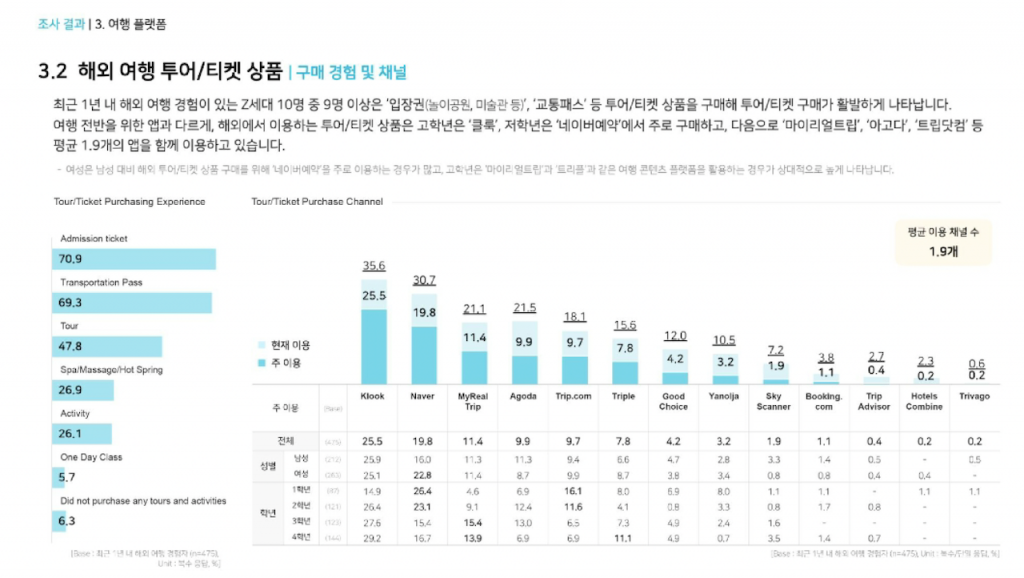
Klook’s platform also thrives among Gen Z, where the company is the number one travel activity provider. This demographic’s social habits – such as sharing interests on Instagram during blind dates – fuel Klook’s success in leveraging social media and micro-influencers. About 70% of Klook’s traffic is direct, with the remaining 30% coming from affiliates and creators, including bloggers and participants in Klook’s Kreator Programme.
Getting the local language right is critical. “When we came into the market, we became known as K-look, which was too much of a fashion vibe. We spent a lot on getting people to say ‘Klook’,” said Lee.
Creating a proprietary “Klook language” with AI
It is now investing heavily in AI to enhance its language localisation. Partnering with Google Cloud, Klook uses Large Language Models to train its AI systems, creating a proprietary “Klook language”.
“We have a localisation trainer in AI to ensure cultural nuances in translation,” Lee said, noting that the results were getting better, very fast. “From a five-year-old, it is now talking like a 10-year-old, and that’s in three months.”
The integration of AI not only supports translation but also identifies emerging micro-trends. These trends include personalized, small-scale experiences, such as private car tours or unique local activities like pork belly and baseball nights.
Now back in his role as general manager, Lee said Klook is growing on top of a robust travel market in Korea – with 16m inbound tourists and 24m outbound travellers. Catering to both sides of this equation is a challenge and an opportunity, and the company has expanded its offerings to include transportation, eSIMs, and private tours while maintaining its core focus on travel activities.
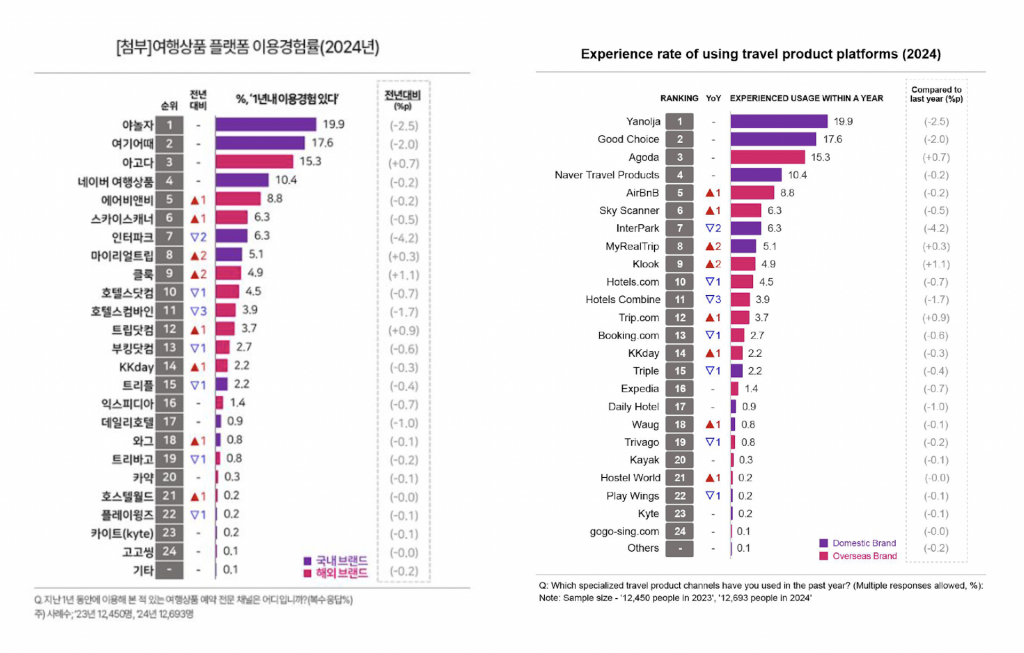
Despite not offering flights or hotels until recently, Klook has ranked high among travel platforms (see chart below), a feat Lee finds particularly satisfying. This is a testament to its ability to serve multiple verticals while keeping customer satisfaction at the core of its operations.
Micro-trends and social commerce
A key driver of Klook’s growth is its embrace of micro-trends fueled by AI and social commerce. For example, small-scale activities, such as college students leading foreign tourists on $30–$40 tours, are becoming increasingly popular. Operators use their social platforms to attract customers while relying on Klook as a booking engine.
These trends reflect a shift in consumer preferences towards hyper-localized, personalized experiences. Lee notes that a mix of AI and social support has allowed Klook to identify and capitalize on these trends, ensuring its relevance in an ever-evolving market.
As Lee puts it, “If the customer is satisfied, we’ve done our job.”
Note: During his interview on stage, Lee shared two charts – one showing the overall positioning of OTAs in the market and the other on booking channels for outbound tours & activities.