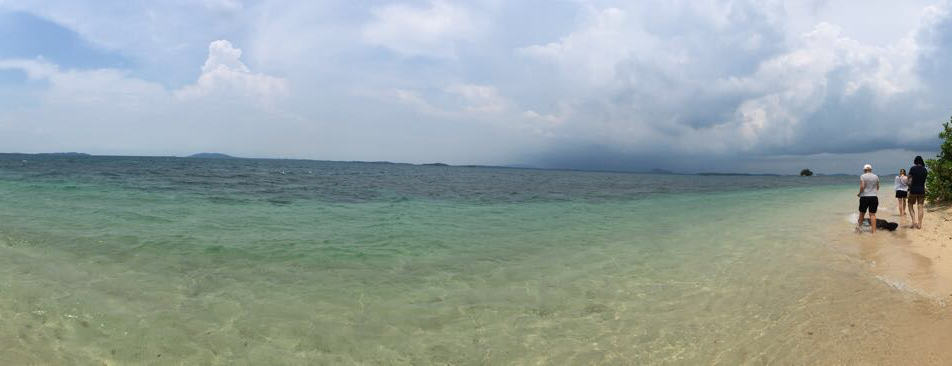
It was exactly a year ago that I visited the private island of Cempedak in the Riau Archipelago of Indonesia and saw it in the making of stage. Piles of bamboo were strewn all over the white sand but there was a definite shape of a resort that resembled a sail unfurling out of the waters.
The island resort, developed by the same folks behind the successful Nikoi Island, soft opened this March, as scheduled, and today 15 villas are operating with five more to be built. Owner Andrew Dixon said the building of the villas has taken longer than expected because demand has been better than expected. It’s hard to build when you have guests who’ve come here for peace, tranquility and newly-wedded bliss – this is after all an adults-only, no-children-allowed haven. And by the way, by the time it’s completed, it would have taken a lot more than 30,000 pieces of bamboo.
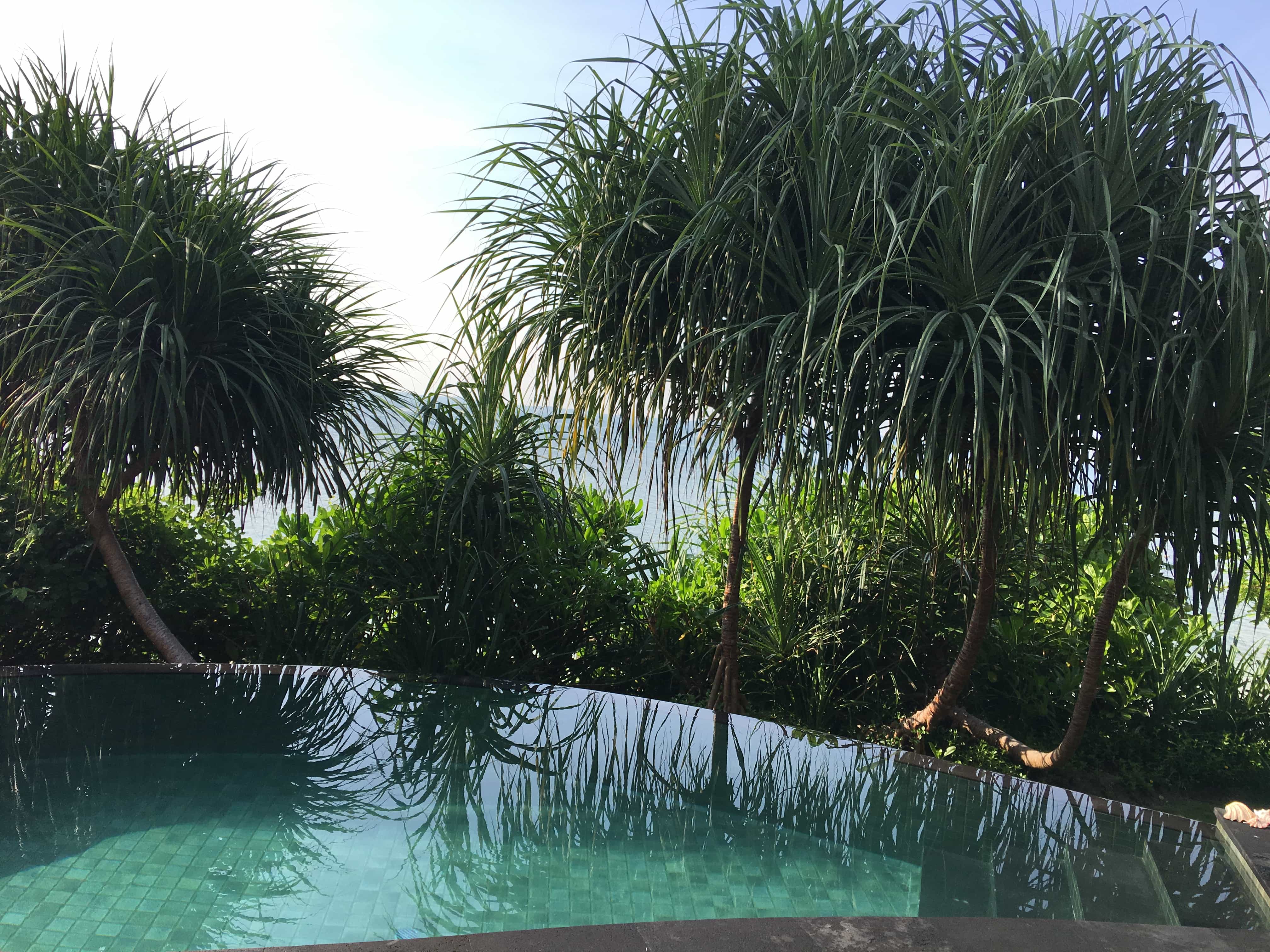
Villa 4, with the private beach just beyond the pool
I stayed in Villa 4, the very same villa I saw in mock-up stage. It’s lived up to its promise – lots of space, great attention to detail in the bamboo work and craft, a private pool and a little private beach at the front. It’s a bit dark – the lighting could be better and we found ourselves using our smartphones to find our way around the room. Maybe that’s intended – it does add a touch of romance, fumblings in the dark.
The attention to the environment is admirable. Cempedak won for Sustainable Design in the HICAP 2017 Sustainable Hotel Awards. Ground water goes through three pumps before it is used for guests’ bathrooms. Waste water is cleaned and filtered and goes back to watering the gardens.
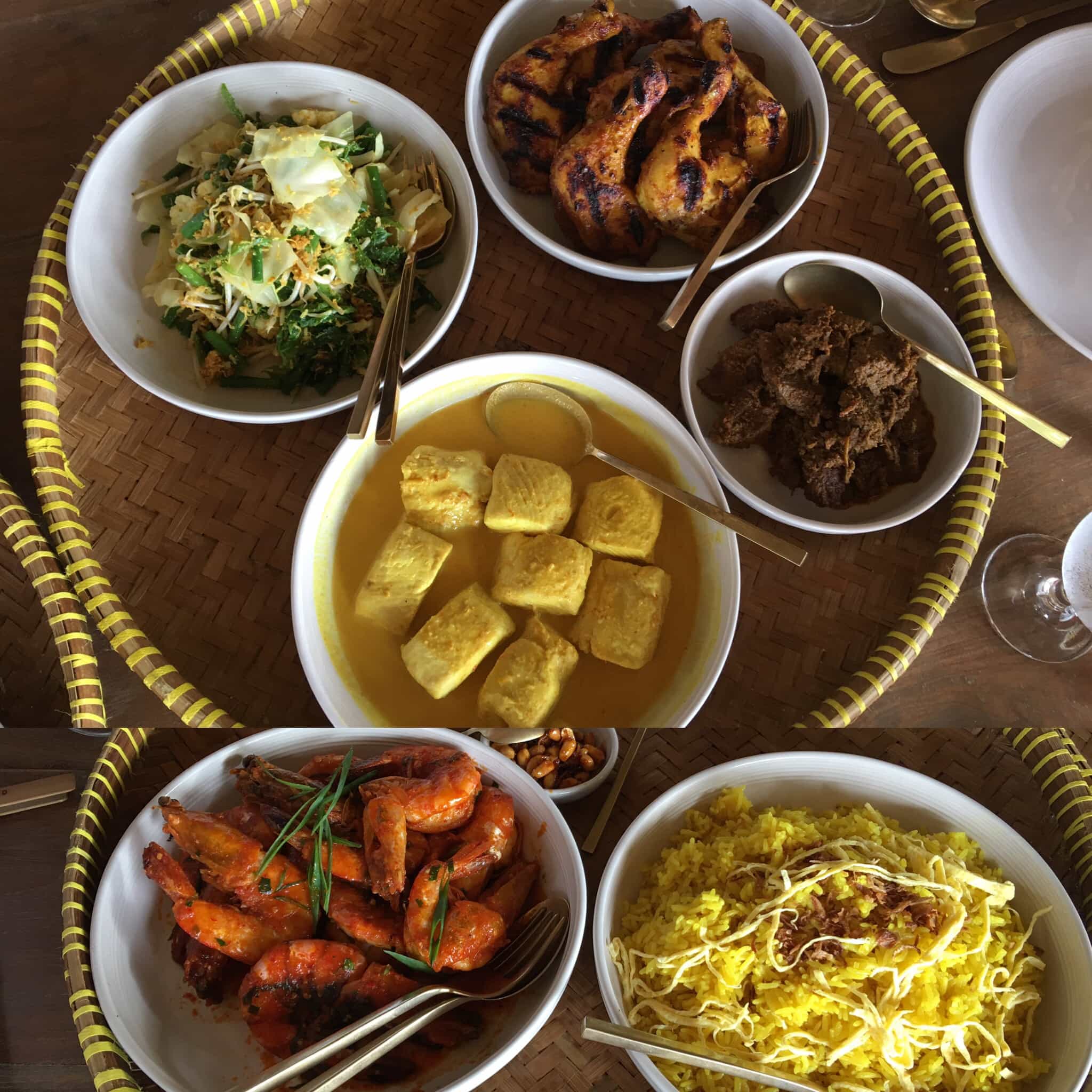
Nasi kuning (yellow rice) platter – on the menu at Cempedak
Food is sourced as locally as possible except for the beef which comes from Australia. Said Dixon, “It’s impossible to get good beef locally.” The food is excellent and you eat what the chefs prepare – there’s something liberating in not having to think about what to order. The beach bar is where if you want company, you gather and you stare at the centerpiece, a stuffed dodo, because its closest living relative, the Nicobar pigeon, is still found on Cempedak – not that we ever saw it. It’s also where you look at the stars and moon through an uber telescope – because there is no ambient light, the night sky is glorious – and you use an app called Star Chart to learn about our solar system.
That’s when you realise how small and insignificant we are in the big scheme of things but that doesn’t stop us from dreaming, daring and doing.
At the WIT Bootcamp and Conference, there were many such dreamers, darers and doers, eight of whom were recognized in our inaugural Hall of Fame – but there are many others, like Dixon, who build things with creativity, love and respect, and who believe in open-ness and diversity, the five values we celebrated this year as part of our “Better Travel” theme.
Here’s another 7 key takeaways from our annual conference which brought together about 550 delegates from around the world to focus their attention on what’s new and hot in the digital travel space in APAC.
- Resilience and talent will be the competitive edge

Chyloe Kurdas: Resilience is about having a growth mindset
Let’s face it – things are going to get even more competitive for startups. You’ve got to build resilience into yourself and your business. Chyloe Kurdas, former Australian Rules Football coach and now running Own Journey Travel, said building resilience is about building around three blocks – mindfulness, gratitude and empathy. She advised keeping a resilience diary – 3 minutes a day answering 3 questions. If you do it for 21 days, it’s habit forming; if you do it for 42 days, it’s life changing. (theresilienceproject.com.au)
You’ve got to attract and retain smart people. Things may be changing as this panel on “Startup Got Talent” showed but in most of Asia, the issue of job security is still very real and most youths tend to favour working for large corporations versus startups.
Mildred Cheong, who worked with Abacus before becoming Singapore-based general manager of the airline technology startup, Air Black Box, saw a chance to make a difference in a field she was passionate about. After the panel, she told us, “A young executive from Korea actually approached me after the session, and thanked us for assuring and validating people like her who go against the “norm” of joining start-ups instead of established big corporations. The job security aspect is very real, especially in the Asian culture.”
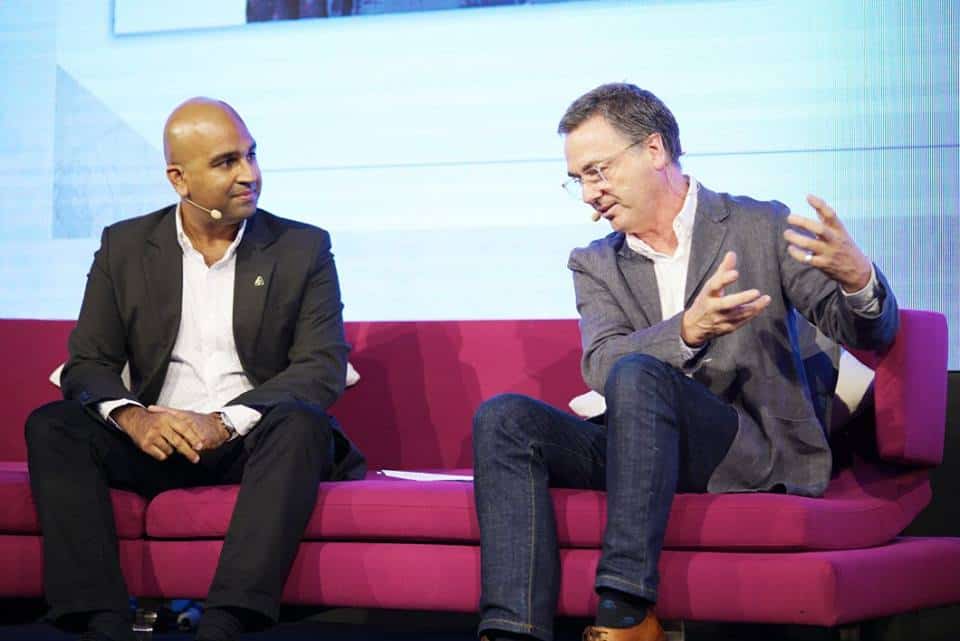
Airbnb’s Parin Mehta (left) and Rod Cuthbert, fiynder of Viator, the first marketplace to sell tours & activities online
- Experiences is the gold at the end of the journey
Entrepreneurs like Dixon build products and create experiences around them. They are the salt and earth of our industry. It’s what keeps travellers happy and keeps them travelling in search of better experiences. Airbnb intends to offer 3,000 experiences across 41 cities, and 90% of trips are rated five star, according to Parin Mehta, director, Trips/Experiences, Airbnb Asia Pacific. On its UI, it shows clearly how many spaces are available, lending transparency to the booking process, a pointed noted by Rod Cuthbert, founder of Viator and now chairman of multi-modal search engine Rome2rio.
It’s not as scalable yet as rooms but it has higher margins – it is understood rental hosts pay only 3% of earnings while experience hosts pay 20%. According to Mehta, the most popular experience in Singapore is One Kind House, an experimental project by former advertising man, Calvin Soh, who turned his mother’s house into a meeting and eating place for creatives and entrepreneurs to gather around home-cooked food and sustainable living ideas. One may question whether selling such niche products can be profitable but Mehta said Airbnb’s goal is to create 100 million entrepreneurs.
In Japan, they’ve deregulated tour guiding – imagine the experiences individuals with passion and creativity can create. Yes, it creates a grey space but innovation tends to happen in the spaces in between. Regulation will just have to keep up.
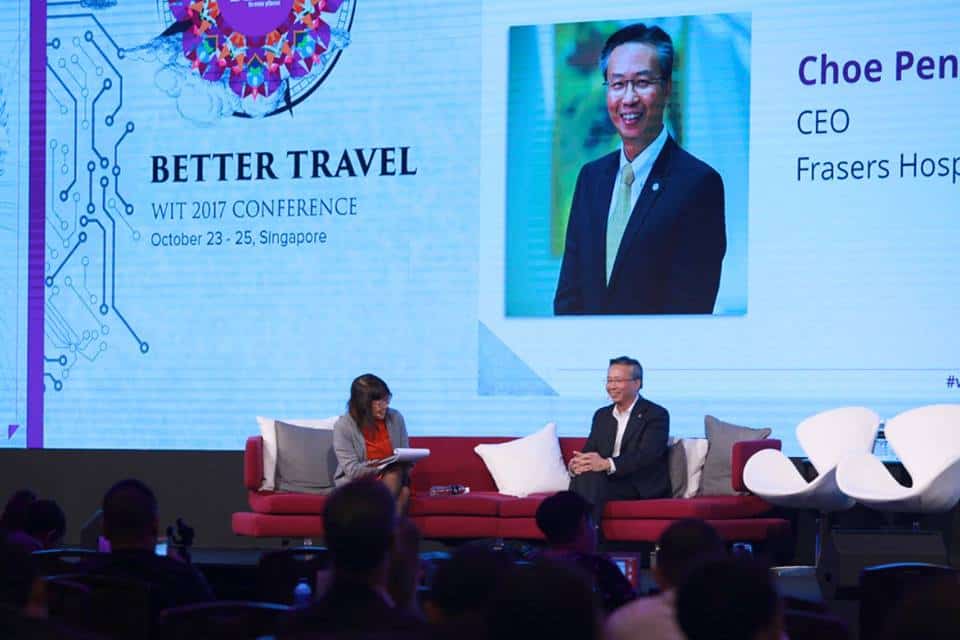
Frasers Hospitality CEO Choe Peng Sum on how it has to keep finding its blue ocean in a world of brand, scale and tech
- Scale may rule but if you keep it real and small, you can find your groove
It is definitely daunting to see the scale at which tech giants operate and it can intimidate you into thinking that’s what you got to do to compete. But honestly, you can’t. You don’t have the marketing dollars, data, reach and tech power, so you got to do what you are good at, work harder and get smarter about it. As Jane Sun, Ctrip’s CEO, said during her session, if you take two smart people and one is prepared to work harder, who wins?
If Asian-based hotel groups like Wharf Hotels, Onyx Hospitality and Frasers Hospitality Group and independent hotels like Hotel ICON, and those under Unlisted Collection, focus on what they do well and find their niche markets with clear value propositions, they will not be mowed down. It is why Frasers’ CEO Choe Peng Sum is embarking on a mission to build brands for a younger generation – Capri – and buy boutique hotel brands like Malmaison and Hotel du Vin. “We have to keep finding our blue ocean,” he said, adding that he was also watching co-working models like WeWork with great interest.
These brick-and-mortar businesses have real assets – Choe spoke of how returns on real estate can be highly attractive – their challenge is knowing how to wrap technology around them as befits their purpose.
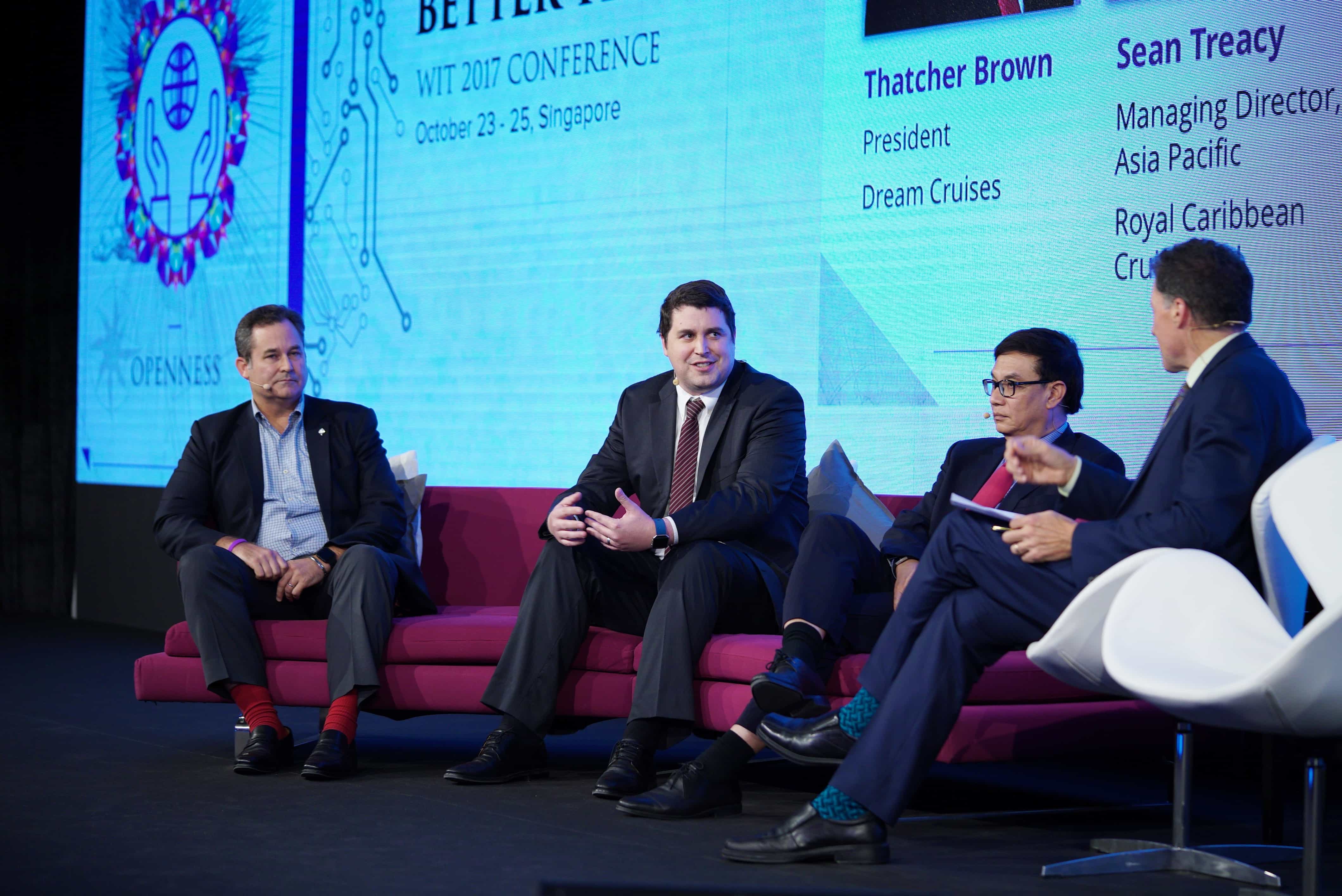
Massive opportunity in cruises which have yet to come online – don’t look to the West for models, Asia will set its own pace. From left, Thatcher Brown, Dream Cruises; Sean Treacy, Royal Caribbean Cruise Lines; Robin Yap, Uniworld/The Travel Corporation; and Arnie Weissmann, Travel Weekly.
- Use your ingenuity and local knowledge to open new markets for yourself, don’t look to the West for models
The panel on rail was eye-opening. Here’s a massive market – US$350 billion, and Asia’s a big chunk of that. In India, about 1.4m rail tickets are sold online a day. But it’s not easy to crack.
However if you use ingenuity and have local knowledge and relationships, you can make a dent and be first movers. Voyagin’s Tushar Khandelwal talks about how they get printing machines from Japan Rail, print them and deliver them to guests in hotels. Gaery Undarsa of Tiket.com, Indonesia, said they may only make very little per rail booking but “when we first started selling the rail tickets, everything started moving really crazy — air tickets sales started going up, as did hotel bookings.” Aloke Bajpal, CEO of ixigo, India, said rail was a good gateway to sell ancillaries – commuters, while waiting for their trains or sitting in them, have time to buy stuff.
You want to get to top of the funnel wherever you can, and catch them on the way down.
Cruise is another huge segment exploding in Asia, as shared in the cruise panel. Again, don’t make the mistake of looking to the West for models where the bulk of cruises is still sold offline. The Asia market is different – shorter trips, younger cruisers, multi-generational customers, mobile-savvy – which means booking patterns will evolve differently and customer expectations will be different. If people can buy condominiums and luxury cars online, they will buy cruises too – the key is how to package and price them.
- Don’t build walls around your business
Airlines, hotels, rail, cruise, buses – all have to start thinking horizontally, not vertically. Your customer is not a vertical, after all. Think of where your customer wants to go and help him get there. Think of what your customer wants to do, and help her do it. In some cases, help them be – as Singapore Tourism Board with its new campaign, “Passion Made Possible”, wants to help them. U-Fly Rewards, the loyalty programme of HK Express, is an example of a programme that lets you earn everyday.
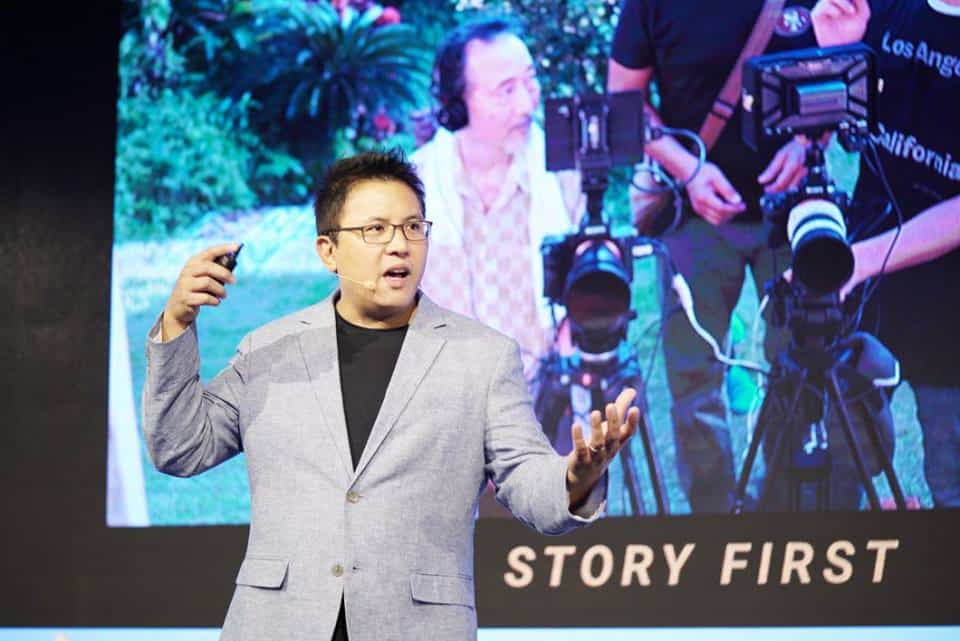
Christian Lee: Story first
- Tell better stories
Christian Lee of Bananamana Films, which made the movie “Jimami Tofu”, spoke of how they were asked to make a movie set in Okinawa and used the opportunity to tell a story around food, love and family. So inspiring was it that Jetstar is launching a direct service from Singapore to Okinawa on the back of the movie and is hosting a private screening in Singapore on November 16.
Lee shared these tips – put your story first, use the “and yes” rule during brainstorming and don’t expect the calvary to come and rescue you – you’ve got to market the living daylights out of it.
7. It’s a big sky out there

The moon, shot on an iPhone, through the end of an 8” Cassegrain Schmidt telesco
I saw the moon for the first time in all her glory through the uber telescope on Cempedak island. I saw craters, edges, nooks and crannies, lots of different spaces for different creatures (if there were any) to make their home on the lunar surface. Saturn was a bit too far away for me to see the ring but I saw the tail of Scorpio. As the telescope showed me, it’s a big universe out there and there’s room for big stars, little stars and different stars. I am reminded of Norman Vincent Peale’s quote, “Shoot for the moon. Even if you miss, you’ll land among the stars.”
There are those that want to build moonshots and there are many more who want to just be among the stars. It ain’t a bad place to be.