


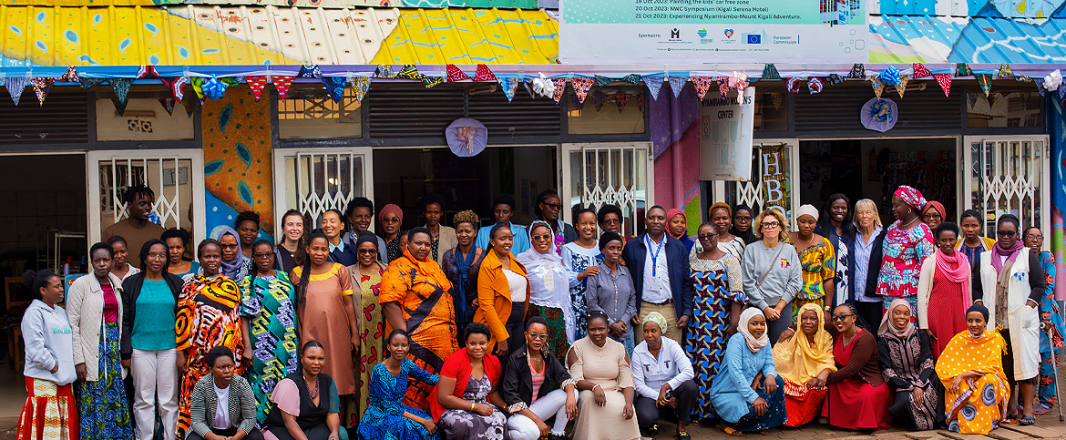
The World Tourism Day 2024 theme of “Tourism and Peace” presents a chance to reflect on the transformative role women-led tourism can play in post-conflict recovery.
by Dr. Stroma Cole, Co-Director of Equality in Tourism
Rwanda offers a powerful example. Tourism has become a pillar of the national economy in the decades following the 1994 genocide, with tourism revenue rising from very low levels to US$390 million by 2016 and $620 million by 2023. This growth has created opportunities for women to lead, innovate and heal their communities.
30 years on from the devastating conflict, it’s a poignant moment to consider the country’s remarkable progress and take inspiration from one pioneering women-led initiative in Kigali.
The role of gender equality in rebuilding post-conflict societies
Women bear the brunt of global conflicts. As well as experiencing horrific gender-based violence, reduced access to essential services, and displacement, they’re often left as the head of families. As a result, women take a central role in rebuilding communities. Economic and social responsibilities weigh heavily, making gender-responsive policies and support essential.
This was the case in Rwanda where the genocide fundamentally shifted the country’s gender dynamics. Women from both the surviving families and the perpetrators had to come together to find a way of dealing with the aftermath of the conflict and moving the country forward.
Tourism has been one pathway allowing local women to collaborate, empower themselves, and forge a strong sense of community. When women are able to participate equitably in the industry, it has the potential to break down traditional gender barriers and create sustainable livelihoods. Community-based tourism especially, run by and for the community, gives women the chance to be leaders, managers and partners in the sector.
It’s this model that has benefitted women at the Nyamirambo Women’s Center, in the south west of Kigali.
Women-led community-based tourism in Nyamirambo, Kigali
The Nyamirambo Women’s Center was formed in 2007 by a group of 18 women. They came from different neighbourhoods, different religious affiliations, ethnic groups on either side of the conflict, and ranged from illiterate to tertiary educated. What united them was that the conflict had left them without men in their households.
The group’s initial mission was to teach disadvantaged women to read and write, with funding from the Slovenia Peace Institute helping kickstart the initiative. Looking for a way to make their work financially sustainable and broaden their impact, the founders turned to community-based tourism.
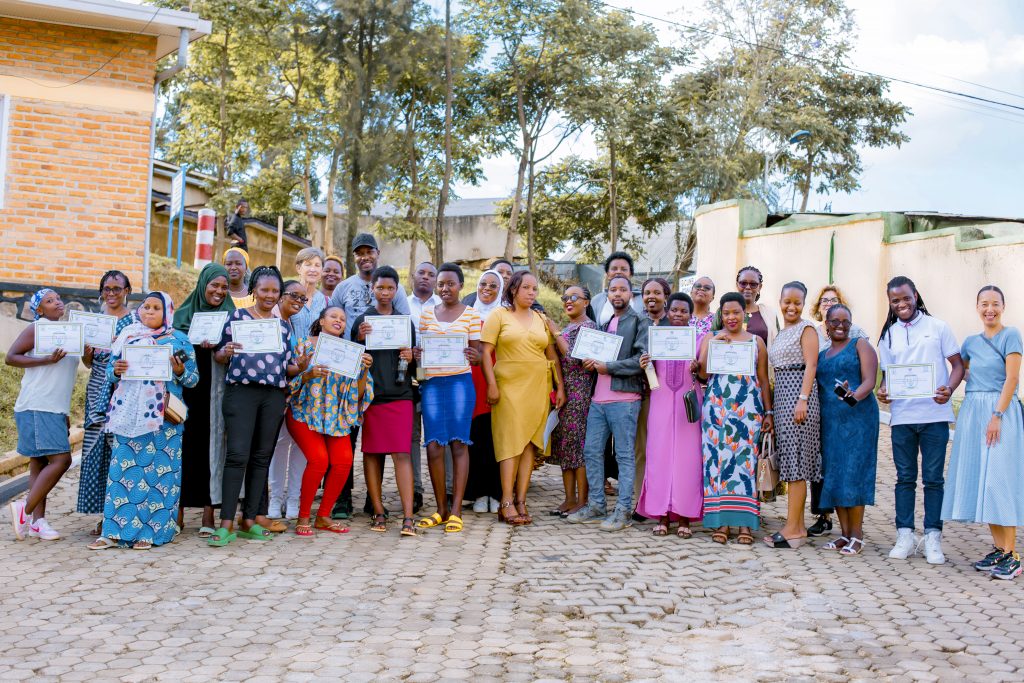
Image credit: Nyamirambo Womens Centre
At this point, in 2011, I was invited by the Peace Institute to deliver hands-on training and work with the women to develop an urban walking tour through the Nyamirambo neighbourhood. Still running today, these tours give visitors to Kigali a flavour of everyday life, social events and businesses in one of the oldest, most colourful areas of the city.
Since then, the centre has continued to expand their tourism activities, income and impact. Tourists can join local women for cooking, basket weaving and sewing experiences, on hikes to Mount Kegan, and buy their handicrafts. Soon, the centre will also offer electric motorbike tours.
“We now employ more than 200 women around the city,” says Marie Aimee Umugeni, President of Nyamirambo Women’s Center and Equality in Tourism Associate. “Our co-operative also creates jobs for women in a village outside Kigali, where we work with other groups who make baskets.”
“We’ve also trained around 6,000 people in reading, writing, sewing and hairdressing. It gives them the opportunity to start their own businesses or find employment.”
As well as the economic impact, women employed by the centre benefit from a support network. “If anyone has a problem or issues at home, she has friends to share with. We can then help them find the right support from the authorities, if they need it,” says Marie Aimee. “I see this as a way of bringing peace at home, which helps bring peace to the country.”
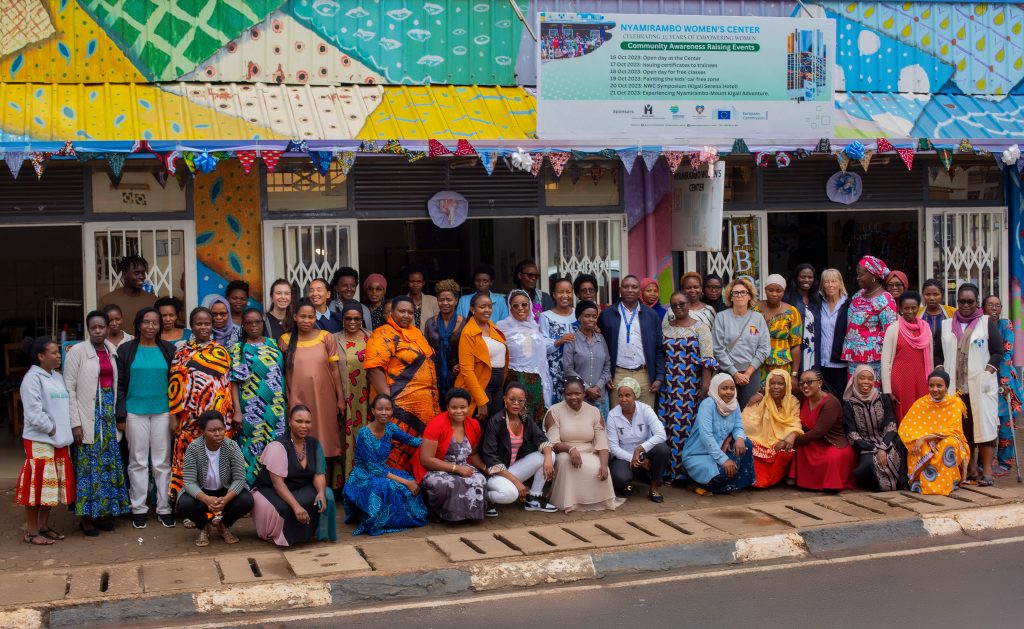
Image credit: Nyamirambo Womens Centre
A ripple effect in the community
The positive impact of the Nyamirambo Women’s Center spreads far beyond the individual women who complete its free training programmes or work on its tourism activities.
Of course, the families of the women employed by the centre benefit, but so does the local economy, with the team supporting many local-owned businesses through their tourism services. For their cooking experiences, for example, they shop for all the ingredients within the neighbourhood.
Marie Aimee summarises how this contributes to broader community cohesion: “Where there is a good understanding within the community, where everyone is contributing and has responsibilities, there is peace.”
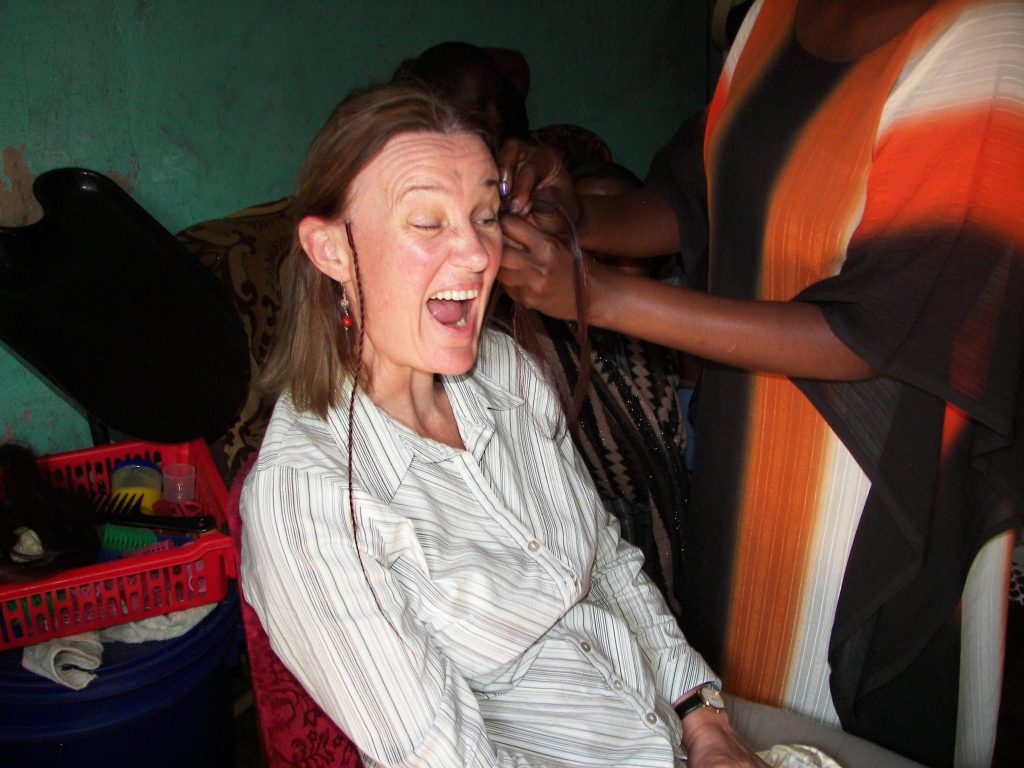
Dr.Stroma Cole having her hair braided during NWC tour Image credit: Equality in Tourism
Exchanging cultures & preserving traditions
The cultural exchange inherent in tourism also has a significant impact on both the local community and visitors, encouraging mutual understanding, solidarity and enrichment. “You meet people from different countries, different backgrounds,” says Marie Aimee. “They share how they do gender equality, so you learn about how other countries are improving women’s lives and apply that.”
“Likewise, your everyday life can be an experience for someone from another country, for someone who doesn’t know how people live here in Rwanda, for instance. And that can become a place to share with others, to earn money, to improve your life.”
For the women of the Nyamirambo Women’s Center, sharing with tourists is also an act of preserving Rwandan culture, whether through telling Kigali’s story in the walking tours or showing how they make traditional handicrafts.
“Women in tourism have an instrumental role in the conservation of heritage and culture,” reflects Marie Aimee. This can be especially vital in post-conflict countries, where restoring a shared cultural identity can help nations heal.
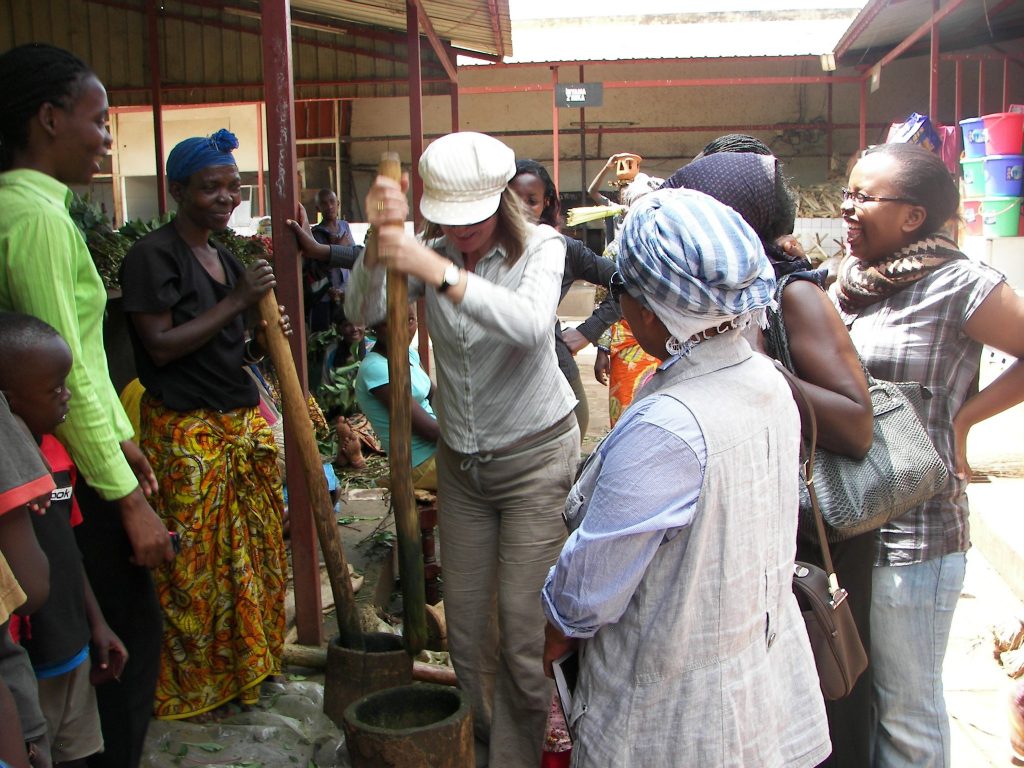
Dr.Stroma Cole taking part in NWC tour Image credit: Equality in Tourism
Tourism, equality, and peace for the future
It’s more urgent than ever to look for ways to create equitable, peaceful societies. Just this month, the 2024 SDG Gender Index highlighted how global gender inequality could be worse by 2030 compared to 2015, with armed conflict one of the threats to progress.
As the Nyamirambo Women’s Center shows, women-led tourism can be a powerful part of the solution. Initiatives like these are a way to give women sustainable livelihoods, unite communities, and maintain peace. Let’s recognise their value and invest in them for a fairer, more peaceful future.


