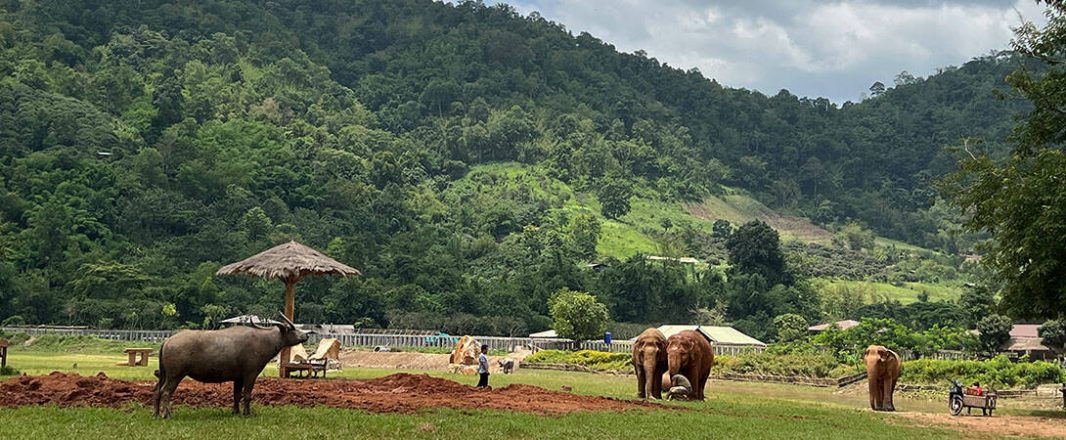
When voluntourism disppeared, Elephant Nature Park got creative
SOCIAL media and a caring, connected community have largely been responsible for the smooth running of the Elephant Nature Park in Chiang Mai, Thailand, since it was established in 1996. So when Covid came along and broke the connectivity, things turned dark.
Tourism income and voluntourism, which had paid for the upkeep of the park and staff and fed the animals, disappeared. To make matters worse, during the pandemic, the animal population at the park exploded as dogs, cats, horses, monkeys were abandoned and rescued by the park.
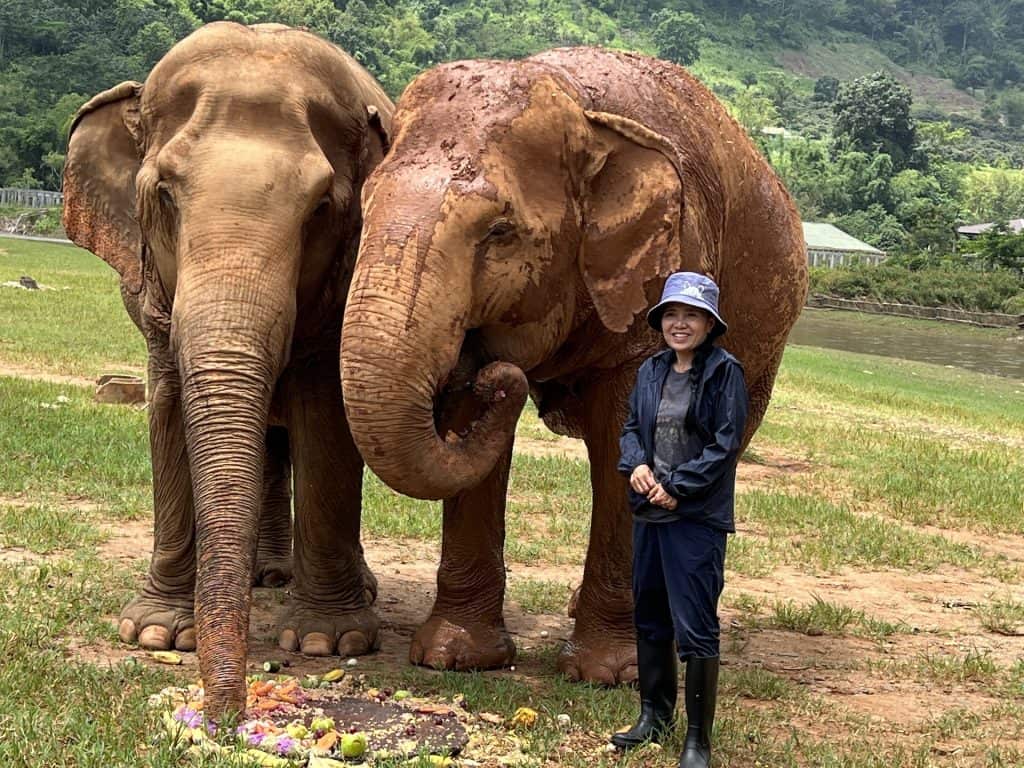
Lek: “It’s been quite good, it gave the animals time to rest. But now we hope tourists will return so we can focus on our mission of animal conservation.”
When I visited the elephant rescue and rehabilitation park in late May, Saengduean (Lek) Chailert, the founder, reeled off the numbers – 5,000 animals in total, including 118 elephants (it went up by four from the time I visited to writing this), 700 dogs and 2,000 cats (from 800 pre-pandemic). There are also water buffaloes and horses and in fact, the next day, the diminutive Lek was flying off somewhere to pick up retired race horses.
“Because of the pandemic, people have no money to feed their animals, their dogs and cats. We rescued 400 cats from one house in Bangkok,” she said. Dog adoptions by members of its community, mainly from the US and Canada, have also dropped from about 100 a year to 10.
The amount of food needed to feed the animals is massive – considering the amount elephants alone eat – 10% of their body weight which equates to 300-500kg of food a day.
Where before there would be easily 60 volunteers a week in the park, the day I was there, there was barely a handful, which is considerably better than before. Since Thailand reopened its borders and eased travel restrictions, tourists are trickling back to Chiang Mai.
“It’s been desperate. Our operation budget was about three (about US$85,000) to four million baht a month, now it’s six million. Thank goodness, we had some savings from before and we had donations from friends and organisations,” said Lek. Pre-pandemic, voluntourism contributed almost 90% of its budget, and the park received about 100 visitors a day.
Lek’s kept going by sheer will and determination, as well as creativity. But then you wouldn’t expect anything less from this woman called the “Elephant Whisperer” by those who know her and who’s fought for elephants since she was 10 years old.
Lek grew up in a remote mountain village in Thailand’s Naan Province and learnt to fight early. “There was so much bullying by boys then,” said Lek, who is from one of Thailand’s minority tribes, Khmu. “One day, I got beaten up so much, I fought back but my mother took me out of school because she said she couldn’t allow me to be beaten up.”
She fought to stay because she knew education was her ticket out, even if it meant walking for hours to school and being bullied. It was when she was transferred to a school run by missionaries that she first learnt about elephants.
“Before that, I always saw elephant figures in temples and we worshipped them with candles and offerings. I saw them as sacred animals. Then one day, I went to a Karen village and heard a terrible sound. I was told it was elephants screaming, they were logging. I saw a bull straining, pulling a really heavy log, while a mahout was jabbing at his head.
“I asked why he is pulling logs, then I realised we use wood in our village. That’s why we don’t use wood now in our park,” she said, gesturing to the bamboo table we were sitting at within the park.
From that first encounter, Lek has dedicated her life to saving elephants, working as a waitress to make money so she could buy medicine for wounded elephants, taking part-time work while a university student in Chiang Mai, and being a tour guide after university. Whatever spare money she had went towards her cause.
In 1991, she started a mobile clinic called Jumbo Express. She rescued her first elephant then, paying 60,000 baht (US$1,700). As she had no place to house the elephant, she placed it at a friend’s property and the friend used it for an elephant show. “I thought at the time elephant in tourism is better than elephant for logging. Later on, I learnt that elephant riding is also horrible in other ways.”
She managed to get a family loan to buy a plot of land to house the elephant. Her luck turned when she met a Texan, Burt van Romer from the Serengeti Foundation, who donated $150,000 and that went towards the purchase of the land the current park sits on.
The park started with nine elephants, and it has grown over the years to become more than an elephant park but an animal sanctuary. “I can’t turn away animals,” she said. “I fall in love with animals easier than I do with people,” she laughed.
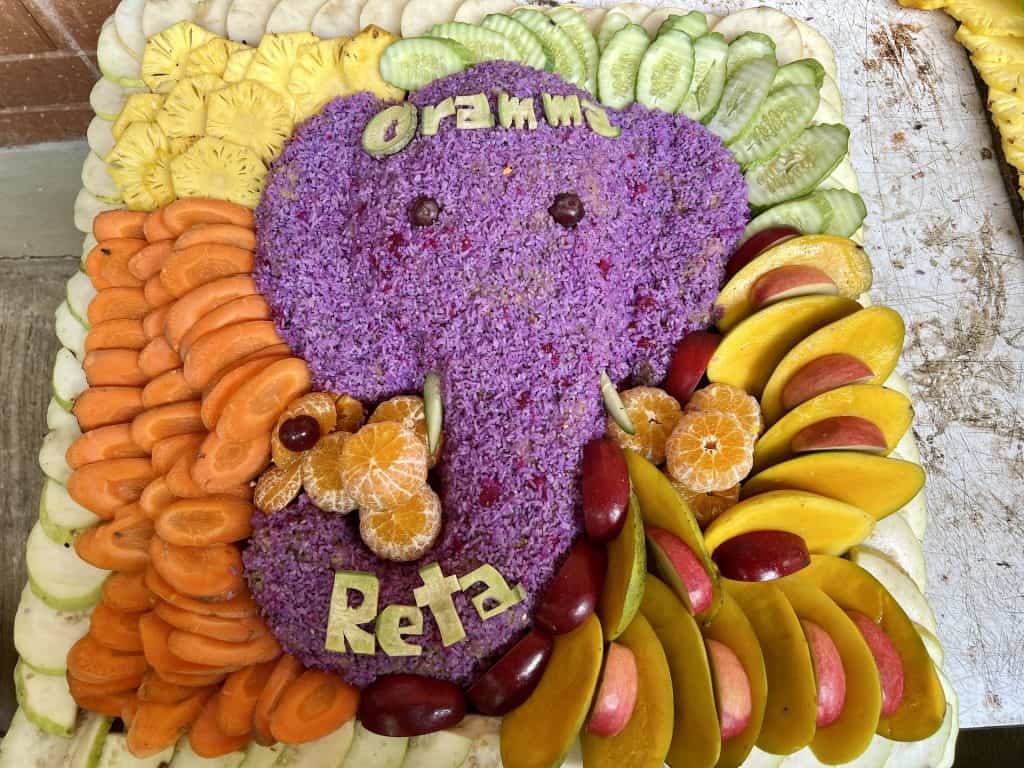
Getting creative with birthday cakes
Despite the challenges caused by the pandemic, Lek said there has been positives. “We learnt to plan for the future and how to manage our costs better. I never thought I’d buy papaya direct from the plantation for example – it’s much cheaper direct. We’ve become smarter about how we spend money.”
It is also growing its own elephant food bank – now 40% of the food for elephants is grown locally, up from 20%. It got creative, selling elephant-themed “birthday cakes” and it also ramped up its online sales of goods and merchandise.
With Thailand reopening, Lek is much more optimistic. The park is one of Chiang Mai’s most-visited attractions and she hopes that tourism will once again help fund the park’s operations. “It’s been quite good, it gave the animals time to rest. But now we hope tourists will return so we can focus on our mission of animal conservation.”
To sponsor an elephant, give here